
There is a particular kind of evening that tells you a lot about your relationship with your own company. The plans fell through, nobody is around, the flat is silent, and you have four free hours. Some people feel relief. Others reach for their phone within a minute and keep scrolling until it is late enough to go to bed.
If you belong to the second group, you are in good company. Many adults never really learned how to be alone. We go from school to shared flats to relationships and busy jobs, and time on our own becomes something that happens by accident in the gaps. When it does arrive, it can feel empty, restless or even a bit frightening.
The good news is that enjoying your own company is a skill. It can be practised, and it gets easier with repetition. This guide is about the mindset and the habits behind that skill: why time alone can feel uncomfortable, how to start, and how to keep being alone from turning into feeling lonely. If you are looking for concrete things to do, my list of 50 solo date ideas is the practical companion to this article.
Being alone and feeling lonely are different things
Being alone describes a situation: nobody else is with you. Loneliness describes a feeling: the sense that you lack the connection you need. The two often overlap, which is why they get confused, but they can exist separately. Plenty of people feel lonely at a crowded party or inside a relationship, and plenty of people spend a whole Sunday by themselves and feel perfectly content.
Being alone but not lonely usually depends on two things. The first is having enough meaningful contact with other people in your life overall, so a day on your own feels like a pause and does not confirm a fear. The second is how you treat the time itself. Solitude you have chosen and given some shape feels very different from hours you are waiting to get through.
It helps to ask yourself, honestly, which one you are dealing with. If you have good people around you but feel uneasy whenever you are on your own, this article is for you. If you feel cut off from others most of the time, the section on loneliness further down matters more, and building connection is the priority.
Why time alone can feel so uncomfortable
A few reasons come up again and again:
There is nothing to distract you from your thoughts. Without conversation, noise or a task, whatever you have been pushing aside tends to surface. For overthinkers, the first hour of silence can feel louder than a busy office.
You equate being alone with being left out. Social media makes it look as if everyone else is out with friends every weekend, which turns an ordinary quiet Saturday into proof that something is wrong.
You have never had much practice. If you always lived with others or filled every free evening, time alone simply feels unfamiliar.
Fear of being alone runs deeper. For some people, solitude touches older experiences of rejection or abandonment. That is worth taking seriously, and sometimes worth exploring with a therapist.
None of these mean you are bad at being on your own. They mean your mind and body are used to something else.
How to be alone: start small and on purpose
The worst way to learn to enjoy your own company is a whole empty weekend you did not plan. The best way is short, deliberate stretches that you choose.
Start with one or two hours. Put them in your calendar like any other appointment: Tuesday evening from seven to nine, Sunday morning before lunch. Decide in advance roughly what you will do, and decide what you will not do, such as answering messages or checking the news.
When the time arrives, notice the first wave of restlessness. It usually comes after ten or fifteen minutes and passes if you let it. The urge to fill the silence is strongest at the beginning, which is why so many people never get past it.
Once two hours feel easy, extend them. Half a day. A full Sunday. A meal out on your own. Each step teaches you that spending time alone is safe and can be pleasant.
Give your time alone a loose shape
Unstructured time tends to drift into scrolling. A loose structure keeps it feeling intentional without turning it into a schedule.
A simple shape for an evening on your own might look like this:
Arrive. Change into comfortable clothes, open a window, put the kettle on. Mark the switch from the busy part of the day.
Do one absorbing thing. Cook something properly, read, draw, do a puzzle, sort photos, play an instrument. Choose something that needs your hands or full attention.
Let your mind wander. A bath, a walk around the block, music with your eyes closed. This is where solitude does its best work.
Close the evening. A few lines in a notebook, tidying the kitchen, preparing something for tomorrow.
If you would like a ready-made structure for an evening like this, The Offline Evening in The Femme Space is a free screen-free evening reset you can use as it is. It is free when you join the newsletter.
Notice what you reach for
Most of us do not experience real solitude very often, because the phone is always there. An evening alone with constant scrolling is technically time alone, but it rarely feels restful, and it leaves you more exposed to comparison and that sense of missing out.
Try one evening where the phone stays in another room, on silent, for the first two hours. Pay attention to the moments you want to reach for it. They usually show up when you feel bored, uncertain or briefly sad, and they tell you a lot about what you are avoiding. My guide to less screen time and more real life has practical ways to make the phone less tempting, and 50 things to do without your phone helps when your mind goes blank.
Find out what you like when nobody is watching
One of the unexpected gifts of time alone is discovering your own taste. Without anyone to please or keep up with, you can find out what you actually enjoy.
Some questions to explore:
What would you eat for dinner if nobody else had an opinion?
Which films, books or music do you like that nobody you know shares?
How fast do you like to walk? How long do you like to stay in a museum?
What did you love doing as a child that you stopped once other people were involved?
Write the answers down as you discover them. Over a few months, this becomes a list of things you know you love, and that list makes every future evening alone easier to plan. If you need ideas for hobbies that work well on your own, these offline hobbies are a good place to start.
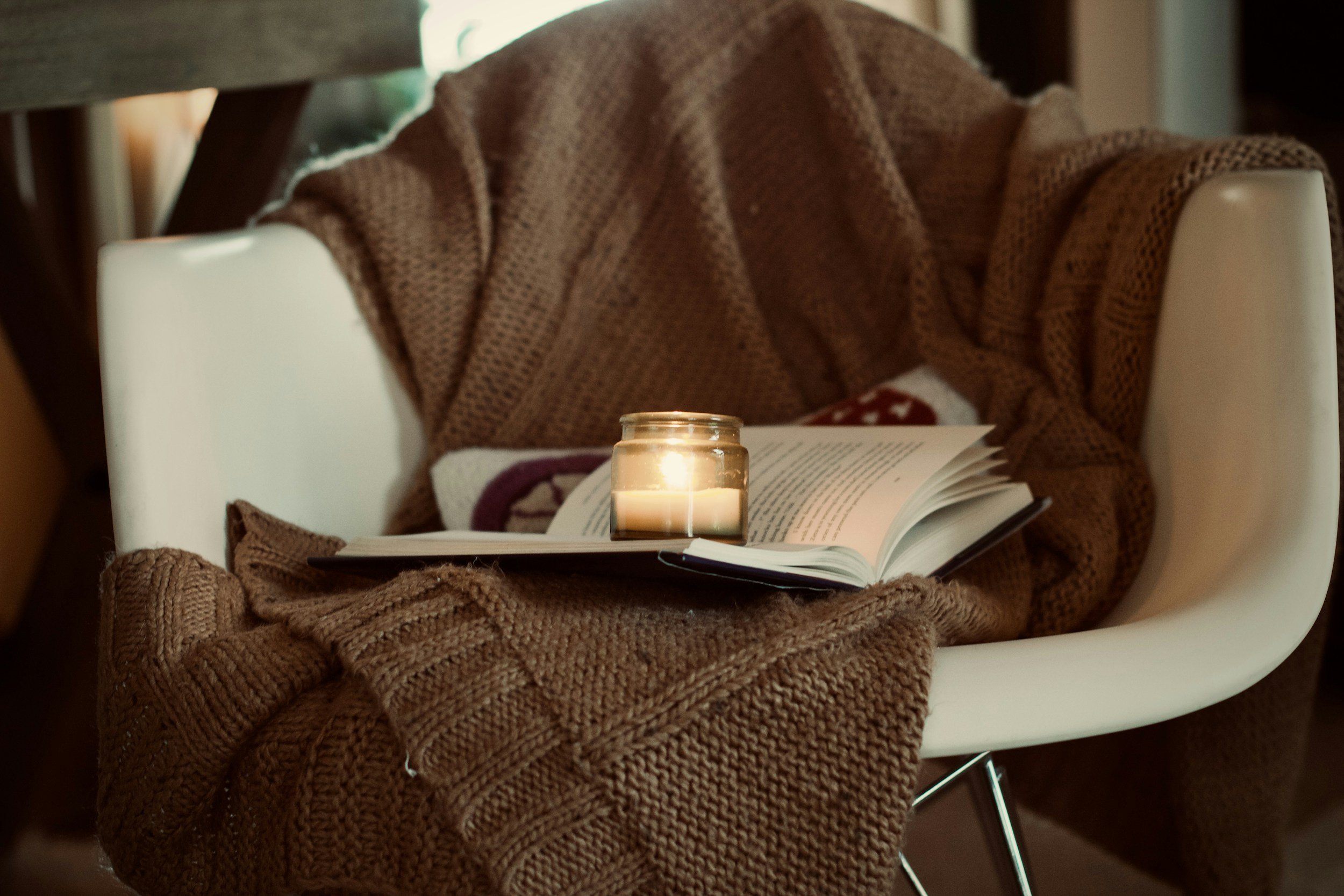
Make your home a place you like being alone in
If you are spending more time on your own, especially if you live alone, your surroundings make a real difference. A home that feels cold, cluttered or purely functional makes solitude harder.
A few small changes help: one comfortable chair with good light for reading, a blanket you love, a candle or lamp you switch on in the evening, fresh flowers now and then, and one surface kept clear so the room feels calm. Cooking for one is worth doing properly too. Setting the table for yourself sounds trivial, but it changes how the meal feels.
People living alone for the first time often find the evenings hardest. Small rituals help here: the same podcast while you cook, a walk after dinner, a weekly call with a friend on the same day. Repetition makes an empty flat feel lived in.

Keep yourself company on paper
Journaling is one of the best ways to make time alone feel like a conversation instead of a silence. You do not need a special method. A notebook, a pen and one question are enough.
Prompts that work well for evenings alone:
What did I enjoy today that nobody else saw?
What is on my mind that I have not said out loud to anyone?
When did I last feel completely at ease on my own?
What do I want more of in my life right now, and what do I want less of?
What would I like to do with my next free evening?
For more questions, these self-reflection journal prompts go deeper, and the night journaling prompts are useful if your thoughts get busy at bedtime. If you would like a more guided approach, my Journaling Companion is a 65-page digital guide and workbook with reflections and writing exercises you can work through on your own.
When being alone turns into loneliness
Enjoying your own company does not replace connection with other people. Most of us need both, and solitude feels best when it alternates with time with people we like.
Signs that time alone has tipped into loneliness include days going by without a real conversation, feeling worse after time alone instead of rested, and a growing reluctance to reach out because it feels like too much effort.
If you recognise that, shift the balance on purpose:
Send one message today. Keep it short: a question or a shared memory is enough. Small contact keeps the door open.
Book one standing plan. A weekly class, a regular call or a monthly dinner. Repetition builds connection more reliably than occasional big plans.
Write to someone. A letter or card often feels easier than a phone call and tends to start a conversation. What to write in a letter has ideas if you are not sure where to begin.
Be around people without needing to talk. A café, a library, a park on a sunny afternoon. Company in the background can take the edge off.
If loneliness has become heavy and constant, or if it comes with low mood that does not lift, please talk to a doctor or a therapist. Loneliness is common, and it responds well to support.
Free printable
The Solo Date List
A little list of dates to take yourself on, with places to remember and thoughtful pages for planning time on your own.
You will find it in The Femme Space, my free library of printables. Join the newsletter, confirm your email and I will send you the password straight away.
Get the free printableA few thoughts to take with you
Learning how to be alone takes the same thing as any other skill: regular practice and patience with the awkward first attempts. Start with short stretches you choose, give them a loose shape, keep the phone at a distance and pay attention to what you enjoy. A good first step is to pick the next free evening in your calendar and decide now how you want to spend it.