30 Offline Hobbies to Try Instead of Scrolling
Things to do with your hands, your attention and your time when you want to spend a little less of your life looking at a screen.
Sometimes I pick up my phone because I genuinely need it. I want to answer a message, check the weather or look something up. And sometimes I pick it up because there are seven empty minutes before I need to leave the house.
That second kind of phone use is the one I notice most. The tiny spaces in the day that used to contain absolutely nothing now seem to come with an automatic solution: scroll. Waiting for the water to boil, sitting on the sofa after dinner, ten minutes before bed or a quiet Sunday afternoon when you cannot quite decide what you feel like doing.
The strange thing is that scrolling does not always feel particularly enjoyable. You can spend forty minutes doing it and put your phone down without being able to remember much of what you just saw.
The problem is not necessarily that we need stricter rules around our phones. Sometimes we simply need other things to reach for. That is where offline hobbies can help.
Not hobbies that need to become a side business. Not another thirty-day challenge. Not something you have to master, document or become impressively good at. Just things you can do because doing them feels nice.
I have grouped these ideas by the kind of thing you might be in the mood for, because choosing an offline hobby becomes much easier when you start with how you actually want to spend your time.
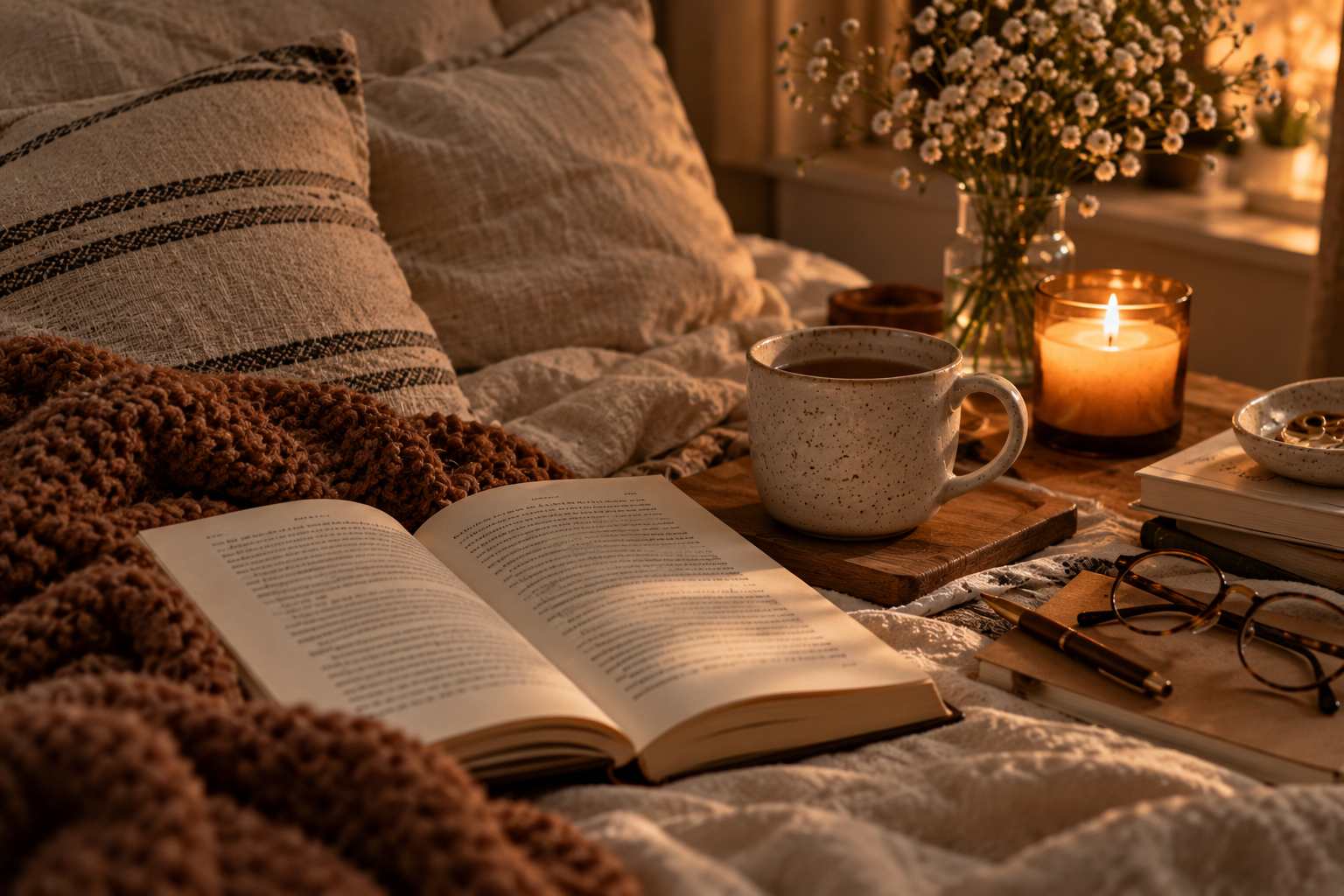
Quiet hobbies for slow evenings
These are the things to reach for when you want your evening to feel quieter rather than fuller. They require very little preparation and work especially well during those small pockets of time that so easily disappear into scrolling.
1. Keep a journal
A notebook is one of the easiest places to begin because journaling can be almost anything you want it to be. Write about your day, make lists, record something funny somebody said, complain, tape in a receipt from a café or write three sentences before bed.
You do not need a daily journaling practice for it to count. If you have never tried it before, start with a blank notebook and one question: What has been on my mind lately? Then see where the page takes you.
2. Read something purely for pleasure
Not something you think you should read. Choose the mystery novel, the ridiculous romance, the old favourite you have already read three times or the book you abandoned six months ago and suddenly feel like returning to.
Reading gives your attention somewhere else to live for a while. If your attention span feels a little rusty after a lot of scrolling, start with ten pages rather than expecting yourself to spend an entire evening with a book.
3. Put together a puzzle
A puzzle gives you exactly one thing to think about: where does this tiny piece of blue sky belong? That can be surprisingly nice.
Leave one on a table for several days instead of trying to finish it in one sitting. Add a few pieces whenever you walk past. It becomes something you can reach for during the small pockets of time when you might otherwise automatically pick up your phone.
4. Do a crossword or word puzzle
Buy a puzzle book and keep it beside the sofa. Crosswords, sudoku, word searches and logic puzzles give your brain something specific to work on without the endlessness of a screen.
There is also something satisfying about physically crossing out an answer in pen, even when you eventually discover it was wrong.
5. Listen to an album from beginning to end
Not while answering emails and not while cleaning five rooms. Just listen.
Choose an album you already love or one you have never heard before, put your phone somewhere else and let the songs play in the order someone chose for them. It sounds almost absurdly simple, but when was the last time listening to music was the entire activity?
6. Learn a few card games
A deck of cards takes up almost no space and can provide an absurd amount of entertainment. Learn a new solitaire game, play cards with somebody after dinner or teach yourself a game your grandparents used to play.
It is an especially useful offline hobby because it requires almost no preparation. You can simply leave a deck somewhere visible and pick it up when you have twenty minutes.
Creative hobbies to do with your hands
If sitting still with a book does not appeal to you, it can be easier to step away from your phone when your hands have something else to do. None of these hobbies require you to consider yourself artistic.
7. Try collage
Keep old magazines, packaging, postcards, scraps of interesting paper and anything else you would normally throw away. Then cut things up.
You do not need to create anything meaningful. Make a page based entirely on colours you like, create a strange little landscape, cover the front of a notebook or make a birthday card. Collage is especially good if you want to make something but the thought of drawing from scratch feels intimidating.
8. Learn simple embroidery
Embroidery requires surprisingly little to begin: fabric, a needle and a few colours of thread. Start with simple lines, tiny flowers, stars or initials rather than an elaborate pattern.
It is slow in a very literal way. You cannot rush hundreds of tiny stitches, which is precisely what can make it so absorbing. And unlike many things we do on screens, at the end you have something you can actually touch.
9. Learn to knit or crochet
There is a reason these hobbies have survived generations. Once you know the basic movements, your hands have something repetitive to do while your mind settles somewhere quieter.
Your first project does not need to be a jumper. Make a square, then perhaps another square. Eventually the squares might become something, or they might remain slightly wonky evidence that you spent an evening learning something new.
10. Draw badly
This is important: badly.
Do not begin by watching forty tutorials about how to become good at drawing. Take a pencil and draw the mug in front of you, your shoes, a plant, your hand or the view from your window.
The drawing does not have to be shown to anybody or even kept. Being a beginner at something without immediately trying to improve at maximum speed is a surprisingly lovely experience.
11. Try watercolours
Watercolour is wonderfully difficult to control, which is part of its charm. You do not need to paint recognisable landscapes.
Make colour swatches, paint simple flowers, mix colours just to see what happens or fill a page with little squares. This can be less about making art and more about spending half an hour watching pigment move through water on paper.
12. Make things from air-dry clay
You do not need a pottery wheel or a studio. Air-dry clay can become tiny dishes, candle holders, ornaments, beads, imperfect little vases or objects with no obvious purpose whatsoever.
It is tactile, messy and very difficult to scroll while your hands are covered in clay. An excellent combination.
13. Make your own cards
Birthday cards, thank-you cards, Christmas cards or cards for absolutely no occasion can all be made with paint, collage, pressed flowers, stamps or simply a pen.
A handmade card does not have to look professional. In fact, it is often nicer when it obviously does not. Keep a few blank ones ready and the next time you think of somebody, send one.
14. Learn simple bookbinding
Making a small notebook by hand is easier than it looks. Paper, thread, a needle and a piece of thicker card can become something you actually use.
Your first attempt will probably be imperfect. The pages might not line up beautifully and the stitches may be uneven. That is part of what makes a handmade notebook feel different from one pulled perfectly from a shop shelf.
Hobbies for keeping memories
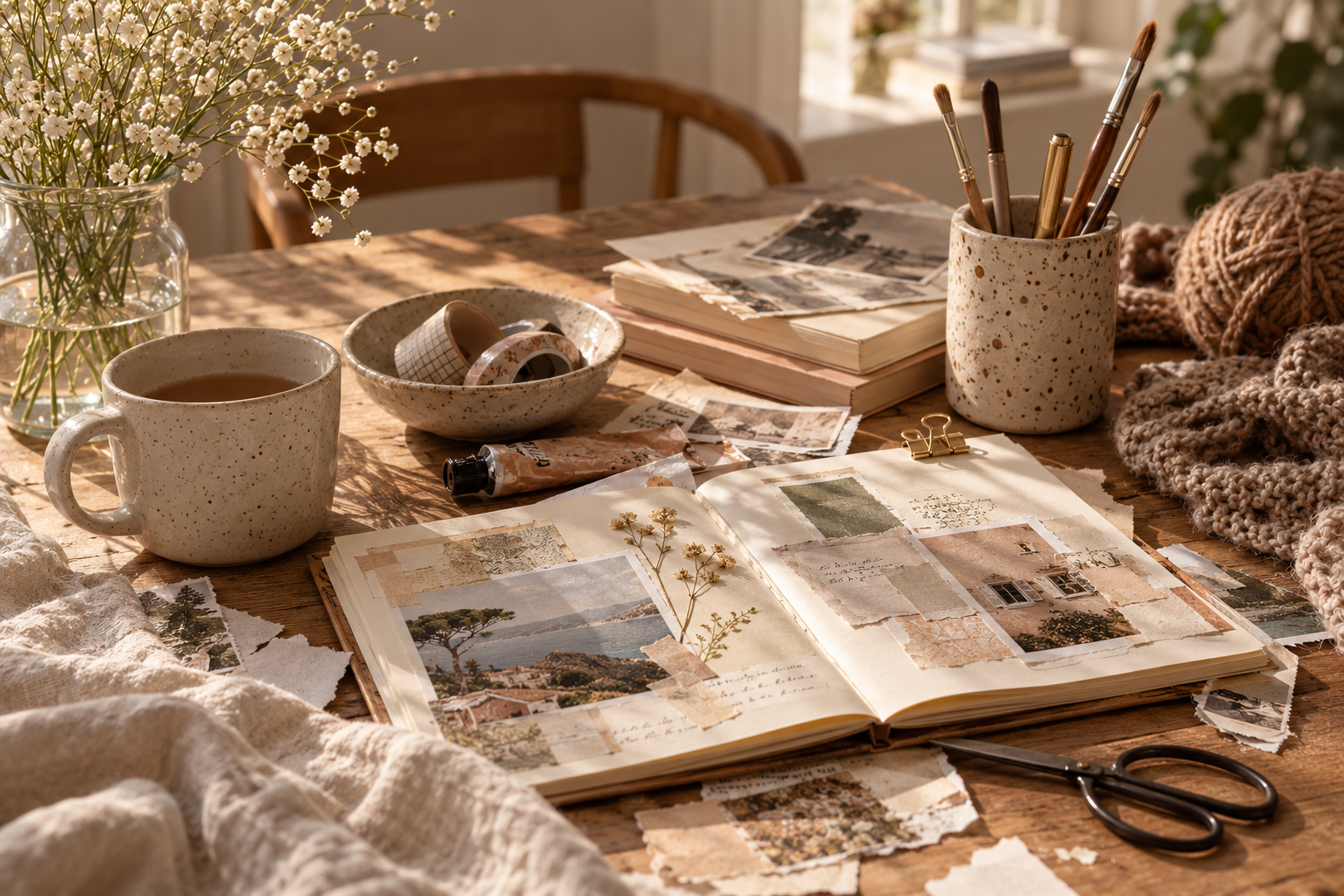
Not every hobby has to be about learning something new. Some of the nicest offline activities are simply ways of paying closer attention to the life you already have.
15. Write letters
There is something wonderfully unnecessary about writing somebody a physical letter. You could send a long letter to a friend who lives far away, a postcard to someone you see every week or a tiny note simply because you thought of them.
Part of the pleasure is in everything surrounding the writing: choosing the paper, finding a stamp, addressing the envelope and knowing that a few days later something tangible will arrive in another person's letterbox. You can also write letters you never intend to send.
16. Keep a commonplace book
A commonplace book is essentially a notebook for things you want to keep: quotes from books, interesting words, recipes, things you overheard, poems, ideas, facts you want to remember or a recommendation somebody gave you.
Unlike a traditional journal, you do not have to write about yourself at all. Over time it becomes a physical collection of things that caught your attention.
17. Make a scrapbook of ordinary life
Not only holidays, weddings and important milestones. Make one about this year.
Keep café receipts, train tickets, photographs, packaging, birthday cards, tiny notes, exhibition tickets and scraps of paper from completely ordinary days. Add dates and little captions when you feel like it.
You are not creating a perfect archive. You are keeping some of the evidence that your everyday life happened.
18. Take photographs with an actual camera
If you have an old digital camera sitting in a drawer, charge it. If you have a film camera, buy a roll of film.
Then take it with you somewhere without worrying about immediately editing, posting or sharing the photographs. Photograph your street, your breakfast, your friend sitting opposite you, an ugly building or the light in your kitchen.
When the photograph is no longer instantly available for public consumption, taking it can begin to feel different too.
19. Start pressing flowers
You do not need special equipment. A heavy book and a few sheets of paper will do. Pick small flowers or leaves, press them carefully and forget about them for a few weeks.
Later you can use them in journals, cards or bookmarks or simply keep them between the pages. It also gives you a reason to pay closer attention when you are outside.
20. Collect something small
Postcards from places you visit, interesting stones, matchbooks, old stamps, pressed leaves, vintage photographs or beautiful packaging can all become tiny collections.
A collection gives you something specific to notice. It does not need to be valuable and it certainly does not need to become enormous. The pleasure is often in slowly finding the next piece.
Useful hobbies that still feel enjoyable
Some offline hobbies leave you with something useful at the end, but that does not mean they have to become another chore. These are particularly good if you like activities with a tangible result.
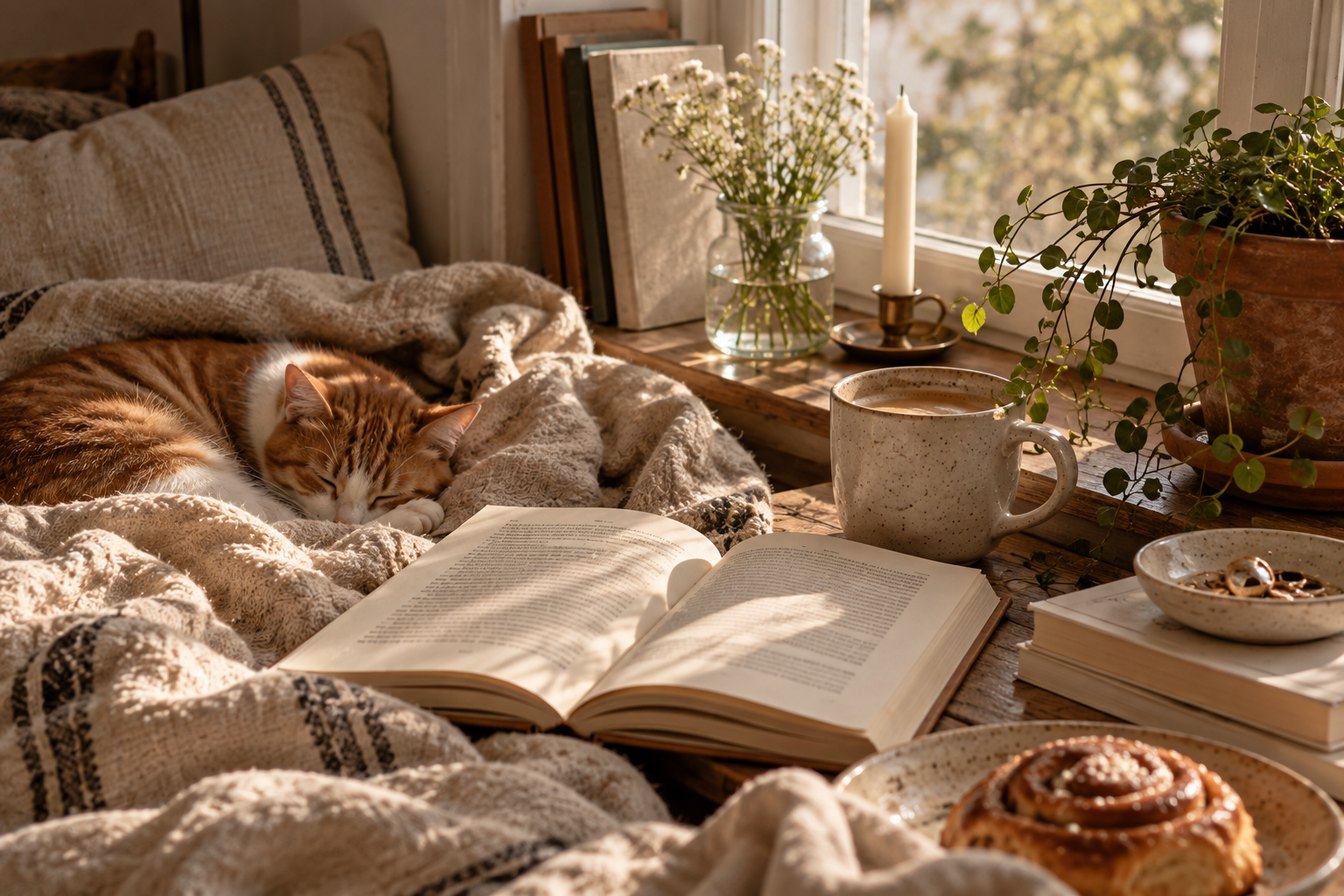
21. Bake something you have never made before
Choose something because it sounds delicious, not because it fits into an elaborate weekend productivity plan. Make cinnamon rolls, try a cake you remember from childhood, learn how to make focaccia or attempt biscuits that look slightly too complicated.
Then eat the result. Even when it goes wrong, baking occupies your hands and senses in a way that makes checking your phone every thirty seconds much less appealing.
22. Cook without rushing
Cooking often becomes another task squeezed between other things. Every once in a while, make it the thing you are doing.
Put some music on, chop everything slowly, make something with several steps and sit down to eat it instead of immediately moving on to whatever comes next. You are allowed to spend an hour making dinner even if there is a fifteen-minute version.
23. Start a recipe notebook
Not a folder of links you may never open again. Write down the meals you actually make.
Add your mother's recipe exactly as she explains it. Record the pasta you improvised and surprisingly loved. Write down what you changed the second time you baked that cake.
Over time it becomes more than a collection of instructions. It becomes a record of what you ate and who you ate it with.
24. Grow herbs on a windowsill
Basil, mint, parsley or chives are enough. There is something satisfying about having a tiny thing in your home that changes slowly because you remembered to give it water.
You do not need a garden or extensive knowledge about plants. One pot on a windowsill counts, and eventually you get to put it on your dinner.
25. Learn visible mending
Instead of hiding a repair, make it part of the object. Patch a hole in a pair of jeans with contrasting fabric, stitch over a worn section of a jumper or repair a tote bag rather than replacing it.
There is something satisfying about learning how to keep something you already own in use for a little longer. The result does not have to be invisible to be beautiful.
Offline hobbies that get you out of the house
Spending less time on your phone does not have to mean sitting at home finding increasingly elaborate ways to entertain yourself. Sometimes changing your surroundings is enough to break the automatic scroll.
26. Visit the library regularly
Instead of only going when you need a particular book, wander. Look at the new releases, pick up a cookbook you would never buy, browse magazines or choose a novel entirely because you like the cover.
A library is one of the few places where you can spend a long time discovering things without being expected to purchase anything. Make going there part of your month.
27. Go for walks without tracking them
No step target, no route recorded and no need to turn the walk into exercise data.
Choose a direction and walk because you want to see what is there. Take a street you normally pass, walk to buy one small thing or go around the block after dinner.
A walk does not become more valuable because an app knows you took it.
28. Keep a nature notebook
You do not need to know the names of everything you see. Record when the first leaves begin changing colour, sketch a bird you saw badly enough that nobody could identify it, tape in a leaf or write down what the sky looked like.
The point is not to become a naturalist. It is simply to notice that the world outside your screen changes every day.
29. Learn something from a physical book
Choose something you have always vaguely wanted to know how to do and find a book about it: bird identification, bread making, drawing, sewing, chess, gardening, calligraphy or a language.
There is a different rhythm to learning when you cannot immediately open fifteen tabs, compare twenty opinions and become distracted by something unrelated. Follow one book for a while and see where it takes you.
And one thing that does not need to be a hobby at all
30. Do absolutely nothing
I am counting this.
Sit on a balcony and drink your coffee without reading anything. Lie on the sofa for ten minutes. Look out of the window on the train. You do not always need to replace scrolling with another activity.
Sometimes the thing we are avoiding when we reach for our phones is simply an empty moment. Let one stay empty. You may be surprised by how strange it feels at first and then by how quickly it stops feeling strange.
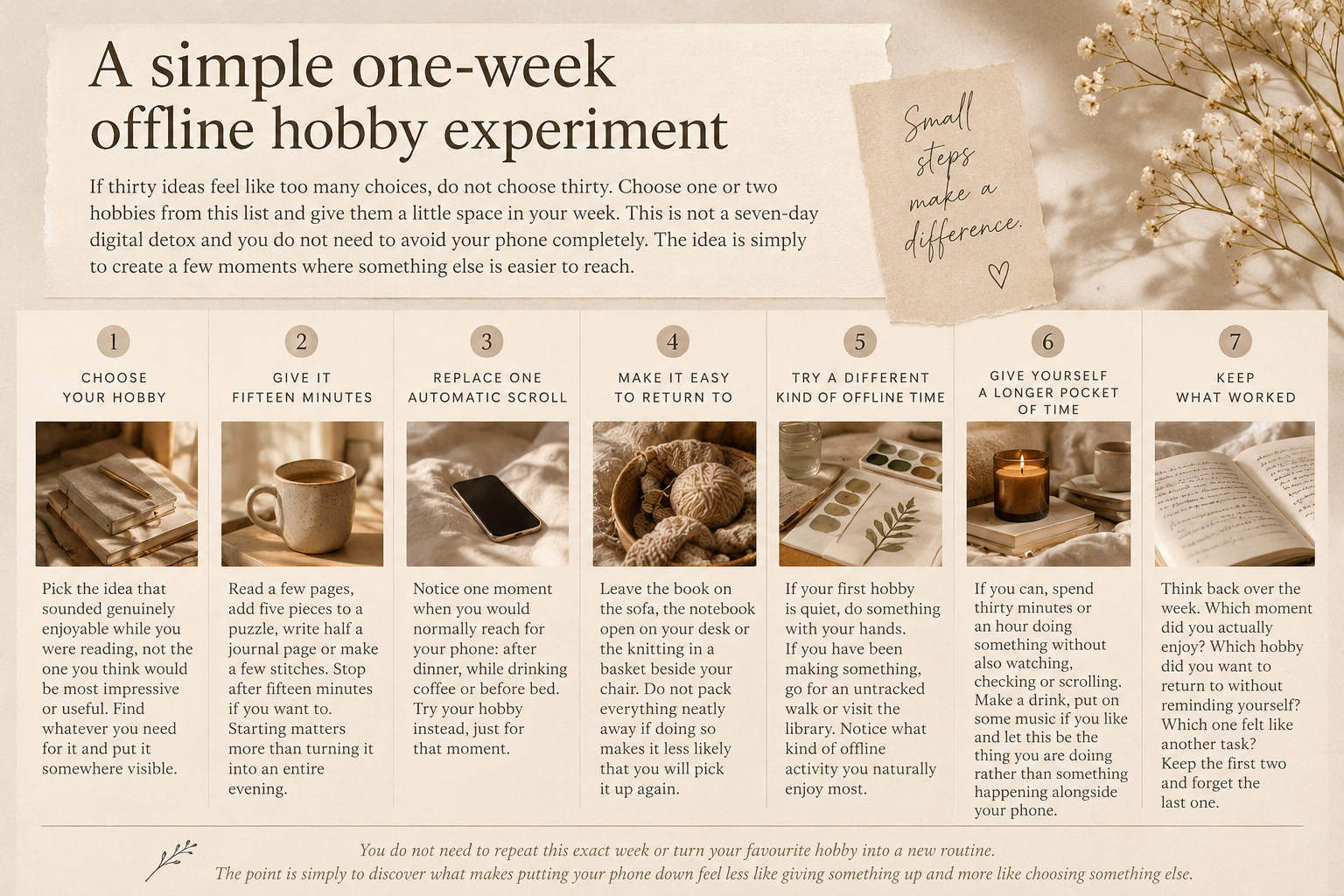
A simple one-week offline hobby experiment
If thirty ideas feel like too many choices, do not choose thirty. Choose one or two hobbies from this list and give them a little space in your week.
This is not a seven-day digital detox and you do not need to avoid your phone completely. The idea is simply to create a few moments where something else is easier to reach.
Day 1 — Choose your hobby. Pick the idea that sounded genuinely enjoyable while you were reading, not the one you think would be most impressive or useful. Find whatever you need for it and put it somewhere visible.
Day 2 — Give it fifteen minutes. Read a few pages, add five pieces to a puzzle, write half a journal page or make a few stitches. Stop after fifteen minutes if you want to. Starting matters more than turning it into an entire evening.
Day 3 — Replace one automatic scroll. Notice one moment when you would normally reach for your phone: after dinner, while drinking coffee or before bed. Try your hobby instead, just for that moment.
Day 4 — Make it easy to return to. Leave the book on the sofa, the notebook open on your desk or the knitting in a basket beside your chair. Do not pack everything neatly away if doing so makes it less likely that you will pick it up again.
Day 5 — Try a different kind of offline time. If your first hobby is quiet, do something with your hands. If you have been making something, go for an untracked walk or visit the library. Notice what kind of offline activity you naturally enjoy most.
Day 6 — Give yourself a longer pocket of time. If you can, spend thirty minutes or an hour doing something without also watching, checking or scrolling. Make a drink, put on some music if you like and let this be the thing you are doing rather than something happening alongside your phone.
Day 7 — Keep what worked. Think back over the week. Which moment did you actually enjoy? Which hobby did you want to return to without reminding yourself? Which one felt like another task? Keep the first two and forget the last one.
You do not need to repeat this exact week or turn your favourite hobby into a new routine. The point is simply to discover what makes putting your phone down feel less like giving something up and more like choosing something else.
You don't need 30 new hobbies
Please do not finish this article by making a list of seventeen things you now believe you should learn. That would rather defeat the point.
Choose one thing that made you pause while reading. Maybe you already own everything you need for it, maybe you used to do it years ago or maybe it sounds slightly silly but enjoyable. Try that one.
The easiest way to spend less time scrolling is not always to become better at resisting your phone. Sometimes it is simply to make the rest of your life a little easier to reach.
Your phone is very good at being available. It sits beside you, ready to fill every empty minute without asking anything from you first. An offline hobby has to compete with that, so give it a chance. Keep the book beside the sofa, leave the knitting where you can see it, put the puzzle on the table, carry a notebook in your bag or keep a deck of cards in the kitchen.
You do not need to become an entirely different person who spends every evening making pottery by candlelight and never checks Instagram again. You can still scroll. You can also make something, read something, write something, notice something or simply spend ten minutes doing absolutely nothing.
There is room for both. The goal is only to remember that your free time can belong to more than your screen.