A Christmas newsletter is a letter that tells friends and family what your year looked like. It is sometimes called a Christmas letter, a holiday letter or a year-in-review letter, and it is usually tucked into a Christmas card or sent on its own. For people who live far apart, it can be the one letter a year that keeps everyone up to date.
Christmas newsletters have a reputation for being long, boastful lists of achievements. A good one is warm, honest, a bit funny and short enough to read with a cup of tea. This guide gives you ideas for what to include, formats that make your letter enjoyable to read, a simple template, two complete Christmas letter examples and practical tips for sending it.
This post contains affiliate links. As an Amazon Associate, I earn from qualifying purchases at no additional cost to you.
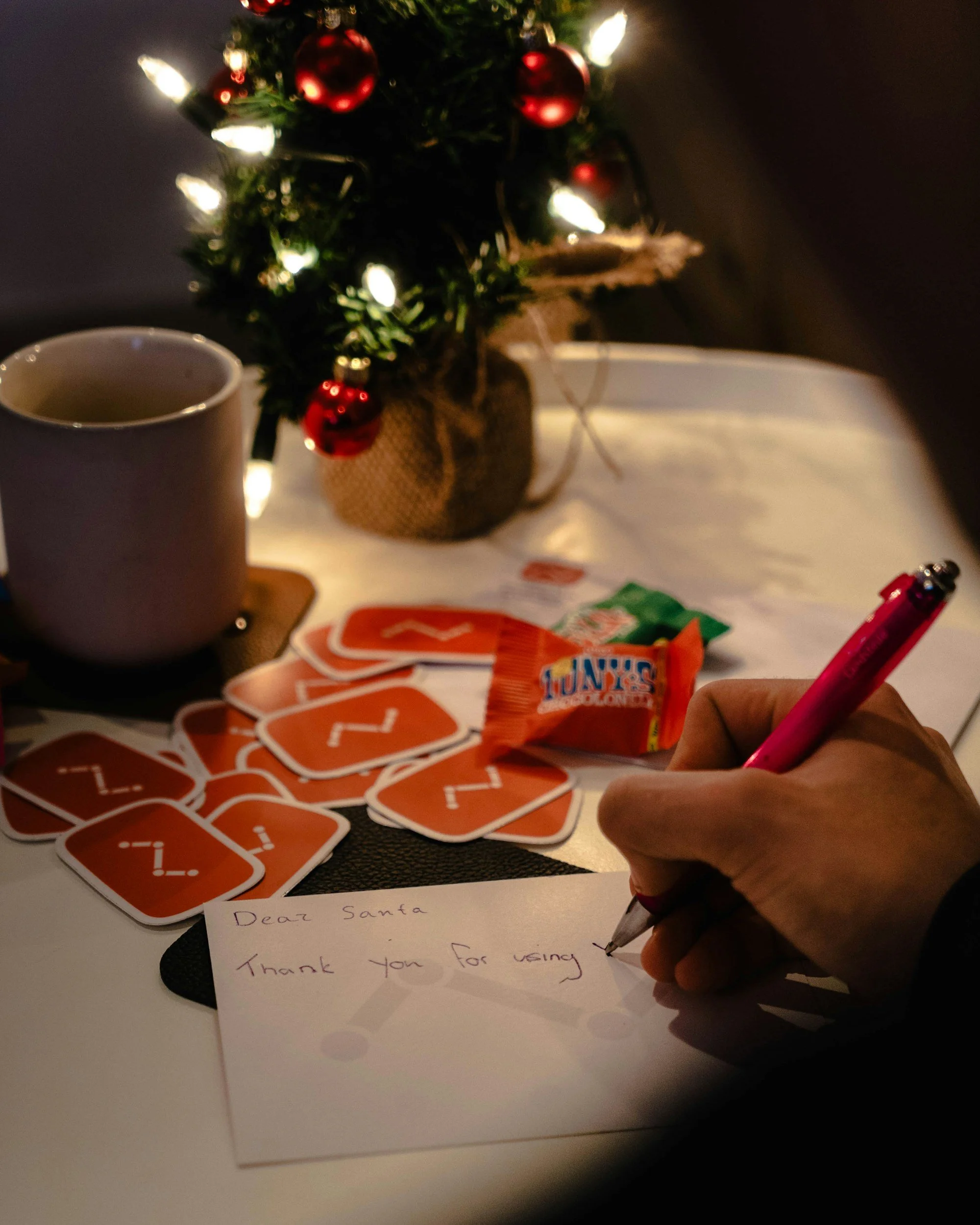
What to include in a Christmas newsletter
You don't need to cover everything that happened. Pick the moments that matter and that your readers will enjoy. Good topics include:
Highlights of the year. A trip, a new home, a new hobby, a celebration.
Everyday life. What a normal week looks like now. Small details make a letter feel real.
Changes. A new job, a move, a new pet, a child starting school.
Something that was hard. If you feel comfortable, one honest sentence about a difficult time makes the letter more human.
Things you enjoyed. Books, recipes, places or films from the year.
A look ahead. One or two things you are looking forward to next year.
Something for the reader. A question, an invitation to visit or a wish for their year.
If this is your first Christmas newsletter, start with what you would tell a friend over coffee if they asked how your year was. That conversational tone is exactly right for this kind of letter.
If you sent a newsletter last year, read it again first. It reminds you what you already told everyone and often gives you a natural way to begin: what happened to the plans you mentioned a year ago?
Before you start writing
- Look through your photos from the year
- Note five moments you want to mention
- Decide on one format for the letter
- Choose one photo to include
- Make a list of everyone you want to send it to
Christmas newsletter formats that are fun to read
A long block of text is the hardest format to read. These ideas make your newsletter lighter and more personal:
Month by month. One or two sentences for each month of the year. Easy to write if you look through your calendar or photos.
Top ten list. Ten best moments of the year, in no particular order. Readers can skim it in a minute.
Each family member writes a paragraph. Children, partners and even pets (written by someone else) each get a few lines.
Questions and answers. Best book of the year? Biggest surprise? Most used phrase in the house? Short answers make it playful.
The year in numbers. Books read, kilometres walked, cups of tea, new recipes tried, plants that survived. Numbers are quick to read and often funny.
Photo letter. A page with four to six photos and a short caption under each.
Firsts and lasts. Things you did for the first time this year and things you did for the last time.
A letter to the year. "Dear 2026" is a different way to sum up what happened and how it felt.
Pick one format and stay with it. Mixing several in one letter often makes it longer and harder to follow.
How to avoid the brag letter
Nobody enjoys a newsletter that reads like a list of promotions, holidays and perfect children. A few principles help your letter sound warm and sincere:
Balance the highlights. For every big achievement, add a small, ordinary moment or a funny mishap.
Write about experiences more than results. "We finally learned to make bread, and the first loaf could have been used as a doorstop" is more fun than "We learned to bake bread."
Be honest about the hard parts. You don't need to share everything, but a year without any difficulties rarely sounds true.
Turn towards the reader. Ask how they are, mention a memory you share or invite them to write back.
Keep it short. One page is ideal. Two pages are the maximum for most readers.
A simple Christmas letter template
If you prefer a clear structure, this five-part template works for almost any household:
Greeting and opening. One or two sentences that set the tone, for example a short description of where you are writing from.
The big picture. In a few lines, what kind of year it was: busy, calm, full of change, surprisingly good.
Three to five moments. The highlights, each in two or three sentences, with at least one ordinary or funny moment among them.
Looking ahead. What you are planning or hoping for next year.
A personal closing. A question, an invitation or a wish for the reader.
Written this way, most newsletters fit on one page and take less than an hour to write.
Christmas newsletters for singles and couples
Christmas newsletters are often associated with big families, but they work just as well if you live alone or as a couple. In fact, they can be even more personal. Write about your home, your work, the friends you spent time with, a trip you took alone, a new skill or a book that changed how you think about something. If you have a pet, it will almost certainly be the star of the letter.
A short, personal newsletter is also a lovely way to stay in touch with friends who have moved away or whom you see less often than you would like.
Example openings
The first lines set the tone. Here are a few openings you can adapt:
"Dear friends and family, another year has flown by, and before it ends we wanted to tell you about ours and say thank you for being part of it."
"This year will go down in our family history as the year of the leaking roof, the very good holiday and the cat who learned to open doors."
"Dear all, I'm writing this by the window with the first snow outside, and it seems like the right moment to look back."
"If 2026 had a title, it would be: 'Things did not go to plan, and that was fine.'"
Example closings
"We would love to hear how your year has been. Write back, call or come and visit. The kettle is always on."
"Wishing you a calm Christmas and a new year with plenty of good surprises."
"Thank you for being part of our year. We hope to see more of you in the next one."
Christmas letter examples
Every Christmas letter sounds different, but it helps to see how the parts fit together. Here are two short examples you can adapt.
Example 1: a family Christmas letter
Dear friends and family,
Another December, and somehow the kitchen table is covered in glitter again. This year brought a few big changes for us. In March we finally moved into the house with the small garden we had been talking about for years, and the tomatoes did better than anyone expected. Lena started school in September and now reads every street sign out loud. We spent two rainy but happy weeks by the sea in August, and Tom has taken up bread baking, which means our freezer is full.
Not everything was easy. We said goodbye to Grandpa Joe in spring and thought of him often this year. Thank you to everyone who sent cards and kind words.
We hope this letter finds you well, and we would love to hear your news too. Wishing you a peaceful Christmas and a good start to the new year.
With love, Anna, Tom and Lena
Example 2: a Christmas letter from someone living alone
Hello, dear ones,
This year was a quieter one, and I have learned to like that. I changed jobs in the spring and now work from home three days a week, which means more walks and far fewer train delays. I finally joined the choir I had been thinking about for ages, and we sang our first concert in October. My balcony is now officially a herb garden, and I read twenty-four books, which I am rather proud of.
The highlight was a week in Lisbon in May with my sister: too many pastries, steep hills and long evenings talking. If you are ever passing through, the sofa bed is ready.
I am thinking of you all this Christmas and hope the new year is kind to you.
Love, Sophie
Keep your own letter to one page, use real details instead of general phrases and end with a question or an invitation, so the letter starts a conversation.
For your Christmas newsletter
Christmas Vintage Stationery Set
Writing paper with a festive vintage design and matching envelopes, made for Christmas letters.
View on Amazon(affiliate link)Kraft Paper with Winter Illustrations
Kraft writing paper with winter motifs for a warm, handmade look.
View on Amazon(affiliate link)Christmas Washi Tapes
Festive washi tape for sealing envelopes and decorating your letter.
View on Amazon(affiliate link)Christmas Wax Seal Stamp Kit
A wax seal kit with Christmas motifs for a special finishing touch on the envelope.
View on Amazon(affiliate link)

Practical tips for sending your newsletter
Send it early. Early December gives your letter time to arrive and avoids the busiest days at the post office. International post needs even more time.
Print or write by hand? If you send many copies, printing the main text is perfectly fine. Add a handwritten line at the end of each one to make it personal.
Add a photo. One good photo of the year says more than a paragraph.
Personalise the envelope. A sticker, a bit of washi tape or a festive stamp makes the envelope stand out. My Christmas snail mail ideas have more inspiration.
Keep a copy. Over the years, your Christmas newsletters become a small family archive.
If you prefer to send a card with a few personal lines instead of a full newsletter, my guide on what to write in a Christmas card has ideas for every kind of recipient. And for a longer, more personal letter to one special person, have a look at how to write a Christmas letter to a friend.
Paper or digital?
Many people now send their year-in-review by email or as a message with photos. That is quick and free, and it reaches everyone at once. A printed letter takes more effort, but it arrives in a different way: it can be read at the kitchen table, pinned to the fridge and kept. Some families do both, sending a paper letter to older relatives and close friends and an email to everyone else. Whichever you choose, the same ideas for content and tone apply.
Who to send it to
A Christmas newsletter is best for people who are interested in your life but don't see it every day: relatives in other cities or countries, old friends, former colleagues you still like, godparents and neighbours who have moved away. Close friends who already know everything may enjoy a personal card more.
Use the newsletter to look back for yourself
Writing a year-in-review letter is also a good moment for your own reflection. While you look through photos and calendars, you may notice what made this year good, what was hard and what you want to take into the next one. If you would like to go deeper, these questions for an end-of-year reflection can help you write a private version just for yourself.
Open your photo gallery tonight, choose five moments from this year and write one sentence about each. That is the first draft of your Christmas newsletter.