

What Is Snail Mail? Meaning, Snail Mail Clubs & Letter Subscriptions
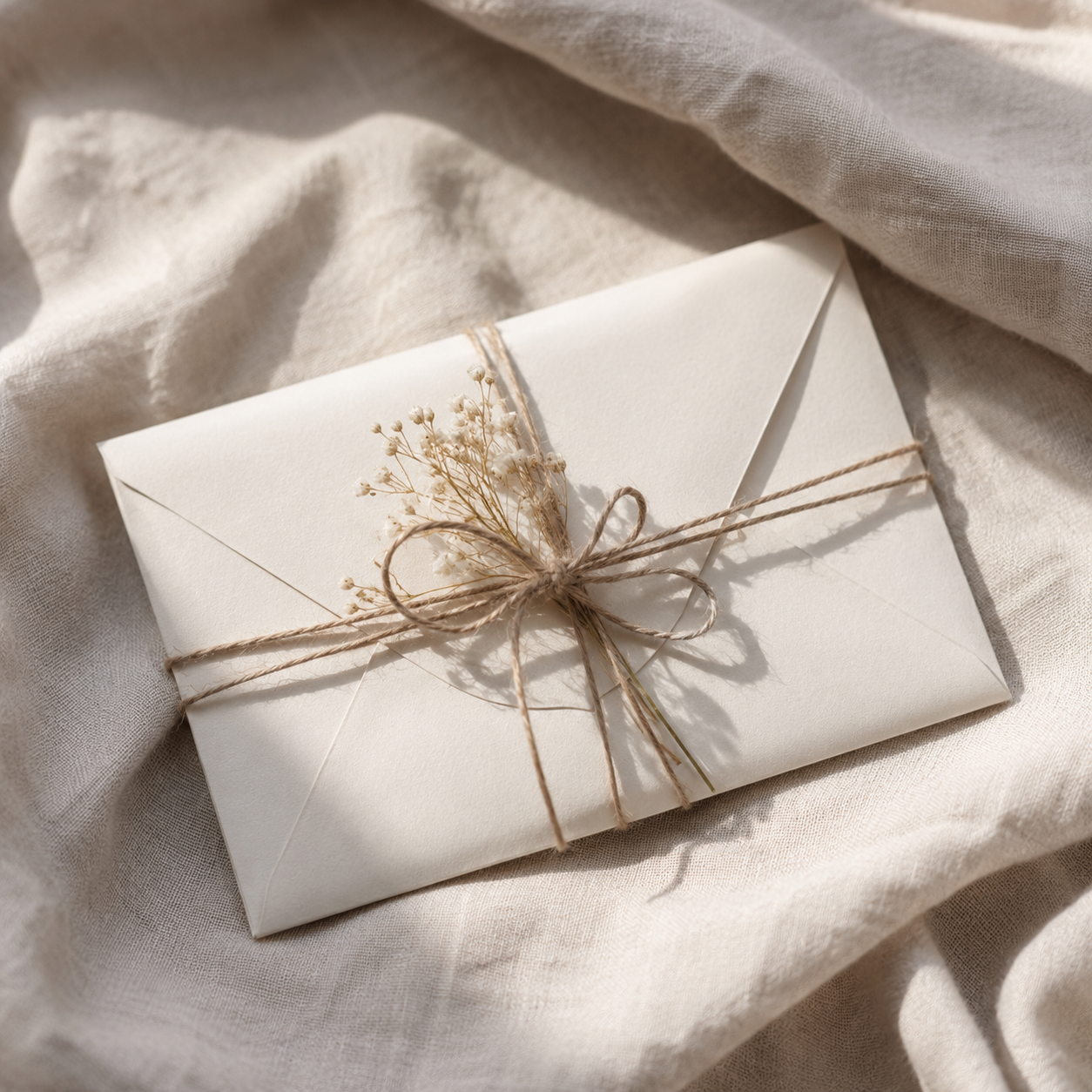
There is something strangely exciting about finding an envelope in your mailbox that is not a bill, an advertisement or something you ordered and forgot about. Your name is on the front, there is a stamp in the corner and perhaps the envelope feels a little thicker than expected. Before you even open it, there is a moment when you wonder what might be inside.
That feeling is part of the reason snail mail has never completely disappeared. Even though most of our everyday communication now happens instantly, people still write letters, send postcards, collect stationery and subscribe to monthly letters that arrive through the post. In fact, snail mail has found a new life through pen pals, postcard exchanges, creative mail and monthly snail mail clubs.
If you have come across the term and wondered what exactly snail mail means, or perhaps seen a snail mail subscription and wondered what you actually receive, this guide will take you through it. And if the idea of finding something thoughtful in your mailbox every month sounds rather lovely, I'll also show you how my own snail mail club, The Femme Letter, works.
What does snail mail mean?
Snail mail means physical mail that is delivered through the postal service rather than a message sent electronically. Letters, postcards, greeting cards and other personal correspondence sent through the post can all be described as snail mail.
The expression is deliberately playful. Compared with an email or instant message that can reach somebody in seconds, a physical letter has to travel from one place to another before eventually arriving in a mailbox. It is slower, and that is where the snail comes in. Today, though, the term is often used affectionately rather than negatively. Search for snail mail online and you will find people sharing decorated envelopes, finding pen pals, swapping postcards, collecting stamps and creating entire communities around sending and receiving physical mail.
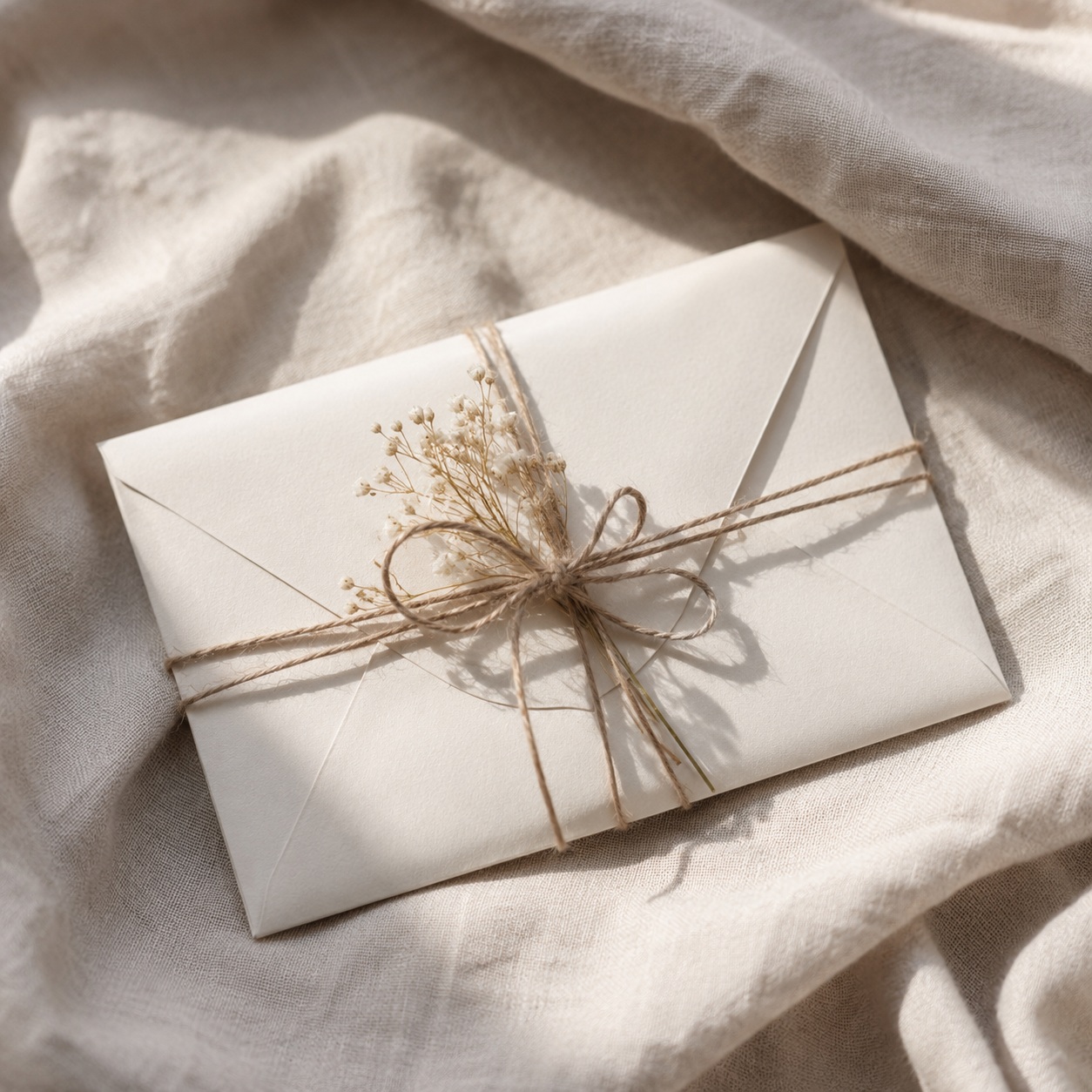
For many people, the slowness has actually become part of its appeal. You cannot refresh your mailbox and make a letter appear. Somebody has to choose or create what goes inside, put it into an envelope, address it and send it on its way. Then there is nothing left to do but wait until, on some ordinary day, it finally arrives.
Why is it called snail mail?
The name comes from the contrast between traditional postal mail and much faster electronic communication. A snail is famously slow, so snail mail became a humorous way of describing letters that physically had to make their way to their destination rather than arriving almost instantly.
What is interesting is how differently that slowness can feel now. We are used to messages arriving immediately, orders being tracked from the moment we place them and information being available whenever we want it. Against that background, waiting for something can actually feel unusual in a good way. You know the letter is coming, but you do not necessarily know exactly when it will appear in your mailbox.
There is anticipation built into the process, and perhaps that is why a term that originally highlighted how slow traditional post could be has become associated with something people deliberately seek out.
Is snail mail still a thing?
Very much so. Of course, most of us are not going to start sending a letter every time we could send a text, and snail mail does not need to replace digital communication to have a place in our lives. It simply offers something different.
A text message is useful when you need to ask somebody what time they are arriving. An email is useful when you need to send information quickly. But a handwritten card arriving on your birthday feels different from both. Physical mail has a presence that digital messages do not quite have. You can leave a postcard on your desk, put a letter inside a drawer and discover it again years later, use a beautiful print as decoration or slip a note somebody sent you between the pages of a book.
Sometimes the nicest part is simply opening the mailbox and finding something that somebody actually wanted you to receive. That is also why snail mail today extends far beyond traditional letters between two people. There are pen pal communities, postcard exchanges, stationery subscriptions and snail mail clubs built entirely around bringing that experience back into ordinary life.
If that slower, more tangible side of everyday life appeals to you, you might also enjoy my list of 50 things to do without your phone. It is not about avoiding technology, but simply remembering that there are plenty of lovely things to do away from a screen too.
What is a snail mail club?
A snail mail club is a subscription or membership where physical mail is sent to members through the post, usually on a regular schedule such as once a month. Exactly what arrives depends on the club. Some are centred around handwritten or printed letters, while others focus on art, poetry, stationery, postcards, journaling or creative prompts. Some combine several of those things in one envelope.
Unlike a traditional pen pal relationship, you generally do not need to write a letter back in order to participate. You join the club, provide your postal address and the creator sends something to your mailbox. You may know the theme or general concept in advance, but often part of the experience is not knowing every detail of what will be inside.
That is what makes a snail mail club quite different from simply ordering stationery online. You are not necessarily choosing every item yourself. Instead, somebody has put together an envelope for that particular month, and part of what you are subscribing to is the experience of receiving it.
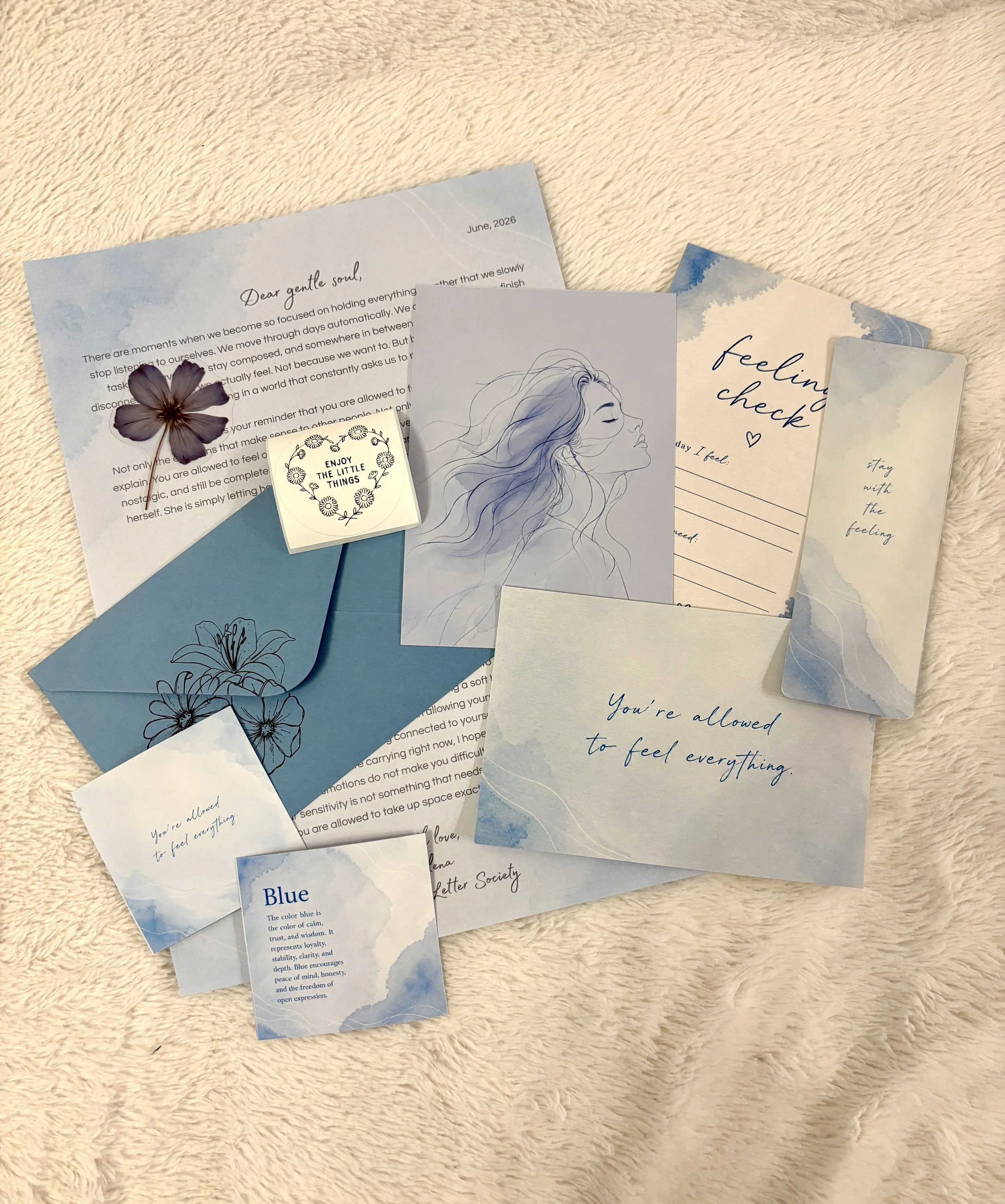
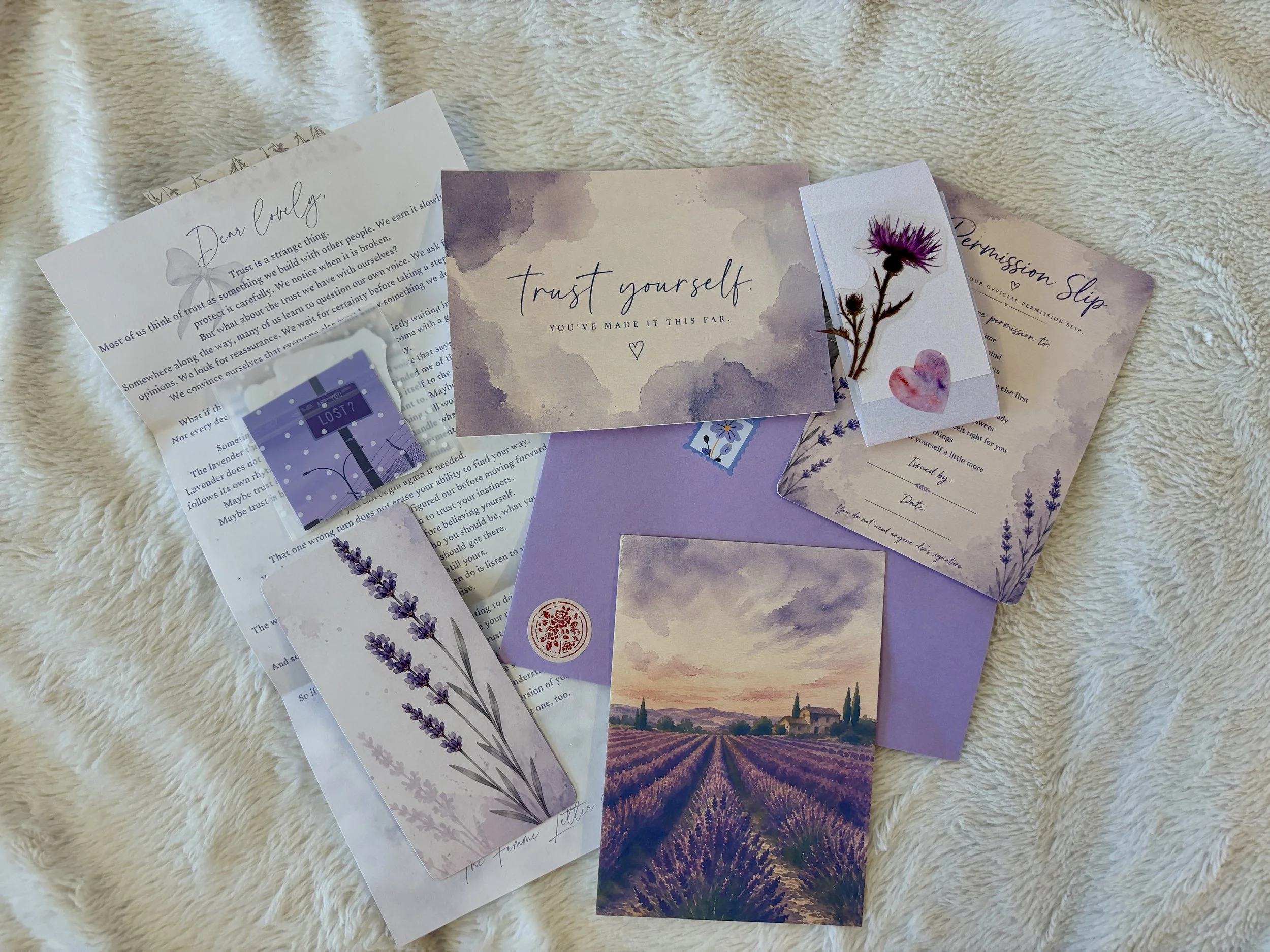
A thoughtful letter, delivered to your mailbox
How does a snail mail club work?
Every mail club is slightly different, but the basic idea is usually very simple. You find a snail mail club you like and sign up, either as a recurring subscription or for a set period. You provide the address where you would like to receive your post, and the creator prepares the month's mail and sends it directly to you.
Some clubs send only within their own country, while others offer international shipping. Some have one fixed mailing date each month, while others send according to the date you joined. The contents can vary just as much. One snail mail club might send a single beautifully written letter, another might include artwork and postcards, while a journaling-focused subscription might contain reflection prompts or small paper pieces to use in a notebook.
There is no single list of things a snail mail club has to include. What connects them is the idea of receiving something intentionally created for you to open offline.
What is a letter subscription?
A letter subscription is a recurring service that sends physical letters through the post. It overlaps heavily with the idea of a snail mail club, although the emphasis can be slightly different. A letter subscription may focus primarily on the writing itself and contain personal essays, stories, reflections, poetry, historical letters or writing around a particular theme. A snail mail subscription may be broader and include additional paper goods or creative pieces alongside the main letter.
There are no strict rules around the terminology, so you will see letter subscription, mail club, monthly letter subscription and snail mail subscription used to describe similar concepts. If you are considering joining one, what matters more than the name is what the creator actually sends and whether the experience sounds like something you would enjoy.
For me, the letter itself is what makes the idea particularly special. Extras are lovely, but there is something very different about receiving words that were written to be read slowly rather than skimmed between everything else happening in the day.
What can you receive in a monthly letter subscription?
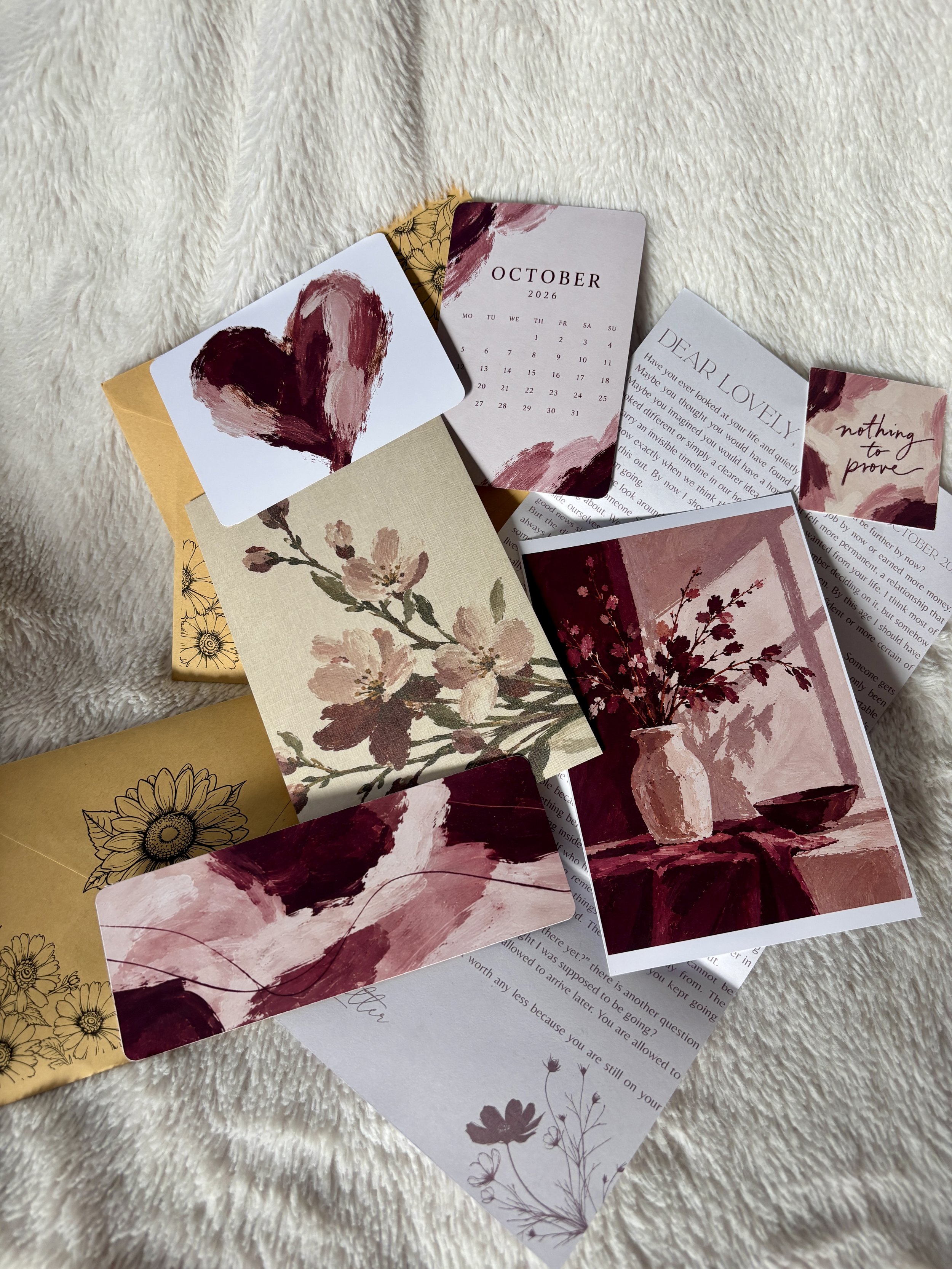
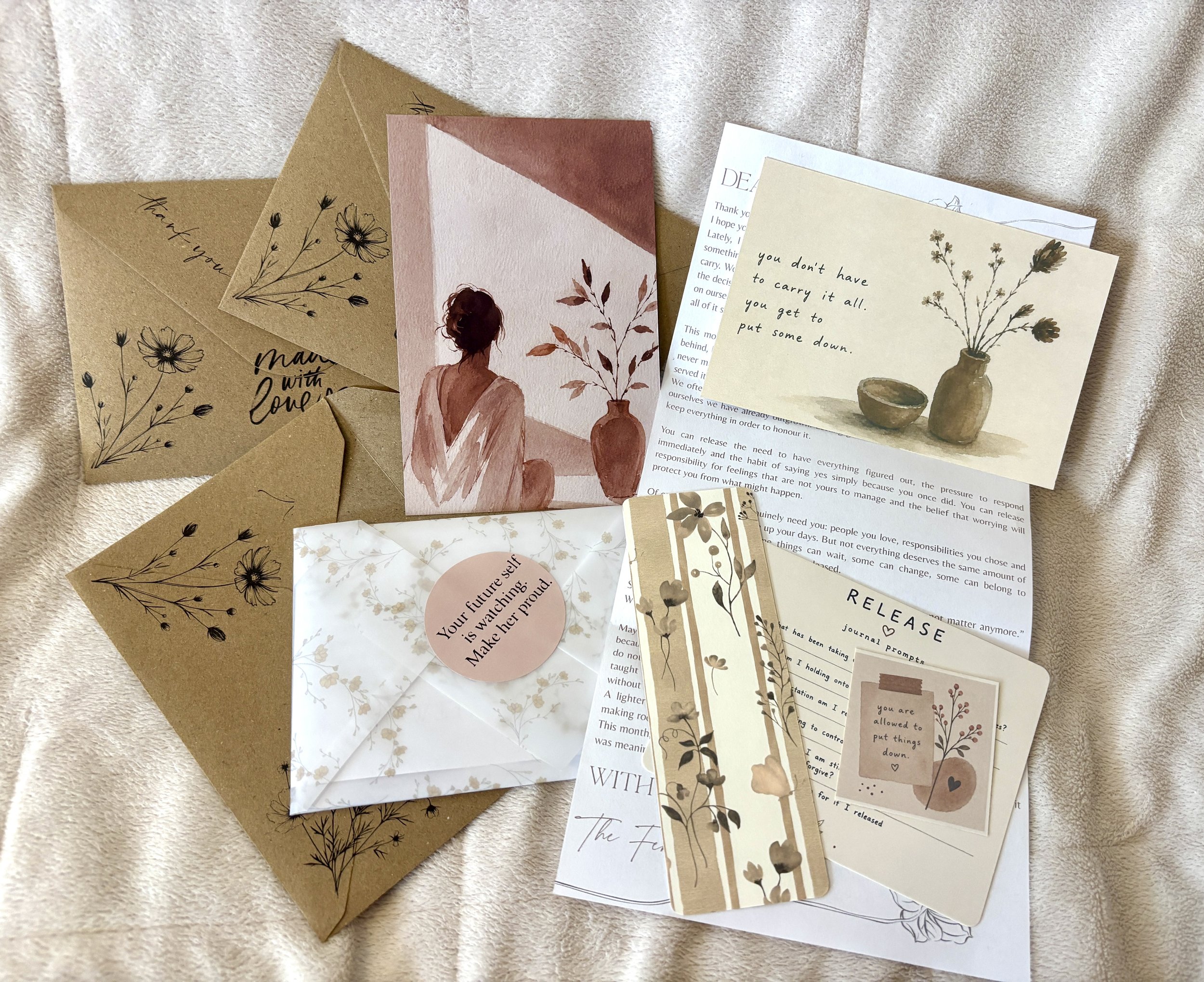
This is where snail mail subscriptions become particularly fun because no two need to look alike. Depending on the club, an envelope might contain a personal or reflective letter, postcards, small art prints, bookmarks, journaling prompts, illustrated cards, stickers, poems, stationery, mini calendars or little paper keepsakes. Some subscriptions follow the same format every month, while others change their contents according to a new monthly theme.
And bigger is not necessarily better. Part of the charm of a letter subscription is that it can be small enough to arrive in an ordinary envelope. It does not need to be a large box filled with products to feel special. A thoughtful letter, a postcard you want to keep and one small surprise can create an entirely different experience from opening another parcel you ordered yourself.
Is a snail mail subscription the same as a subscription box?
Not quite. When people hear the word subscription, they often imagine a box arriving at the door filled with beauty products, snacks, books or craft supplies. A letter subscription is usually much simpler. It can arrive through the letterbox rather than as a parcel, and the focus is less on receiving as many products as possible and more on the experience of the mail itself.
That distinction is one of the things I love about it. There is no huge box to unpack and no need for every month to contain more things than the last. An envelope can hold a letter, a beautiful postcard and one tiny surprise and still feel incredibly special. It feels closer to receiving thoughtful post from somebody than opening an online order.
Why are people joining snail mail clubs?
There probably is not one single reason. For some people, it is nostalgia. They remember exchanging letters with friends, sending postcards from holidays or receiving birthday cards in the post. For others, snail mail is completely new. They simply like the idea of having something physical in a world where so much of what we read, save and share exists on a screen.
There is also the anticipation. Most things we buy online are tracked almost obsessively. We know when an order was processed, when it left the warehouse and sometimes exactly how many stops away the delivery driver is. A letter is different. It disappears into the postal system and then, one ordinary day, it is simply there. That tiny element of surprise can make checking the mailbox fun again.
What happens after you open it matters too. A good snail mail subscription asks very little from you. You can make a cup of tea and read the letter, put the postcard somewhere you will see it again or use a journaling prompt as the beginning of a few pages in your notebook. You do not need to turn it into an elaborate ritual. It can simply be twenty quiet minutes in an otherwise normal day.
Snail mail doesn't have to mean giving up your phone
There is sometimes a tendency to talk about offline activities as though we need to choose between two completely different lives: one where we are constantly online and another where we throw our phones into a drawer and spend our evenings writing letters by candlelight. Real life is usually somewhere in between.
I love creating more offline moments, but I also use my phone every day. Most of us do. Snail mail is not interesting because digital communication is bad. It is interesting because physical communication feels different. You can send twenty messages to somebody during the week and still be delighted when they send you a birthday card. Both can exist.
That same idea is behind a lot of what I write about on The Femme Letter. Slowing down does not have to mean redesigning your entire life. Sometimes it is simply having another option when you do not want to spend the next half hour scrolling.
Who is a snail mail club for?
You certainly do not need to be a stationery collector or somebody who writes ten pages in a journal every morning to enjoy a snail mail subscription. It might appeal to you if you love receiving personal post, enjoy journaling or self-reflection, collect postcards or beautiful paper things, like thoughtful surprises or simply want something different to look forward to in your mailbox each month.
It can also make a lovely gift for somebody who is difficult to buy for. Instead of giving them one object, you can give them several months of unexpected post arriving at home. Unlike a digital subscription, there is something left afterwards too: a stack of letters, a postcard on the wall, a bookmark inside a favourite book or a small paper piece tucked into a journal.
If the journaling side of snail mail is what interests you most, you can also read How to Start Journaling When You've Never Done It Before. You absolutely do not need an established journaling habit to enjoy reflective writing or prompts.
What is The Femme Letter?
This is probably a good point to tell you why I care so much about all of this. The Femme Letter is my own monthly snail mail club, created because I wanted to make the kind of post I would genuinely be excited to find in my own mailbox. Something thoughtful and personal, without filling an envelope with things simply for the sake of making it feel full.
Each month is built around one theme, usually something many of us think about but do not always talk about openly. Previous themes have explored things such as feeling overwhelmed, self-worth, loneliness and the expectations we quietly carry around with us. At the centre of every edition is the letter itself. Around that, I create small paper pieces that belong to the month's theme, which might include a postcard, bookmark, mini calendar, journaling element or another small surprise.
I design, prepare and put the mail together myself before sending it out. The idea is not to give you another list of things you should improve about yourself. It is simply to send something real to your mailbox, something you can open, read slowly and perhaps keep afterwards.
How does The Femme Letter work?
The Femme Letter arrives through the post each month. You subscribe online, enter the address where you would like your letters delivered and I prepare the current edition before sending the physical envelope to you. Each month has its own theme and accompanying paper pieces, so what you receive changes throughout the year.
You do not need to complete anything once it arrives. You do not have to journal about every question or turn the letter into another self-improvement exercise. Read it on the sofa, take it to a café, keep the postcard, put the bookmark into whatever you are currently reading or write three pages because one sentence stayed with you. Once the envelope reaches you, what you do with that little moment is entirely yours.
What if you like the idea but aren't ready to subscribe?
You can still bring more of this feeling into everyday life without joining a club. Send somebody a postcard for no particular reason, write a letter to a friend you normally only message or keep a few stamps at home so sending something does not become a whole project. You could even write a letter that never needs to be mailed.
If writing is the part that appeals to you most, journaling is another lovely place to start. And if you ever sit down with a notebook only to realise you have absolutely no idea what to put on the page, I have also collected ideas for what to write in a journal when you don't know what to write.
The point is not to suddenly turn everything in your life into an offline ritual. It is simply to remember that we still have options. Sometimes sending a three-line postcard or spending ten minutes with a notebook is enough.
Bringing a little more snail mail into your life
Perhaps that is why snail mail still feels special. It is not the fastest way to communicate, and that is no longer really the point. A letter takes time to create, time to send and time to arrive, but when it finally does, there is something waiting for you that exists outside an inbox or an app.
You can carry the envelope upstairs without knowing exactly what is inside, open it at the kitchen table and spend a few minutes reading something that was created to be held in your hands. Afterwards, you might put it away, display part of it or rediscover it months later between the pages of a notebook.
For something so ordinary, physical mail can create a surprisingly lovely little moment. That is what I hope The Femme Letter does too: not transform your life or ask you to become a different person, but simply give you something thoughtful to find in your mailbox and a reason to slow down for a little while when it arrives.
Before you go
I'd love to know what snail mail means to you. When was the last time you received a letter or postcard that you actually wanted to keep? Or, if you have never joined a snail mail club before, what would you love to find inside a monthly envelope?
Tell me in the comments below. I'd genuinely love to know what makes receiving physical mail special to you.

Letter + Art Print
💌 A gentle letter, just for you
The Femme Letter is a monthly mail club created to help you slow down and reconnect with yourself.
In a world that moves so fast, this is something soft, personal, and real to look forward to each month.
Every envelope is thoughtfully put together by hand. It is meant to feel like a small ritual, something you can open slowly, keep and come back to whenever you need a quiet moment.
This is about creativity, femininity, connection, and the beauty of receiving something meaningful in the mail.
✨ What's included
✔ A heartfelt printed letter
A personal letter written each month to reflect, slow down, and reconnect.
✔ A themed art print (4×6 inch)
Inspired by the feeling and intention of the month.
Simple, thoughtful, and created to give you one quiet moment every month.
📮 Subscription details
The Femme Letter is a monthly subscription.
Subscribe by the 19th at 23:59 to receive that month's letter.
Subscriptions placed after this date will receive the following month's edition.
All letters are sent out on the 25th of each month.
Shipping is included and available worldwide.
Delivery times:
EU: a few days
International: up to 3 weeks
Letters are sent via standard mail without tracking.
💜 Please note
All subscription tiers share the same monthly theme and artwork. The only difference is the number of items included in each subscription.