Some mornings start with a full head before you have even got out of bed. Plans, worries, half-finished conversations and the to-do list all compete for attention. Morning pages are a simple way to empty that head onto paper before the day begins.
The idea comes from Julia Cameron's book The Artist's Way, first published in 1992, and it has since spread far beyond the world of artists and writers. Many people who would never call themselves creative write morning pages because they help them think more clearly. This guide explains what morning pages are, how to start, what to do when you have nothing to say and how to keep the habit going.
This post contains affiliate links. As an Amazon Associate, I earn from qualifying purchases at no additional cost to you.
What are morning pages?
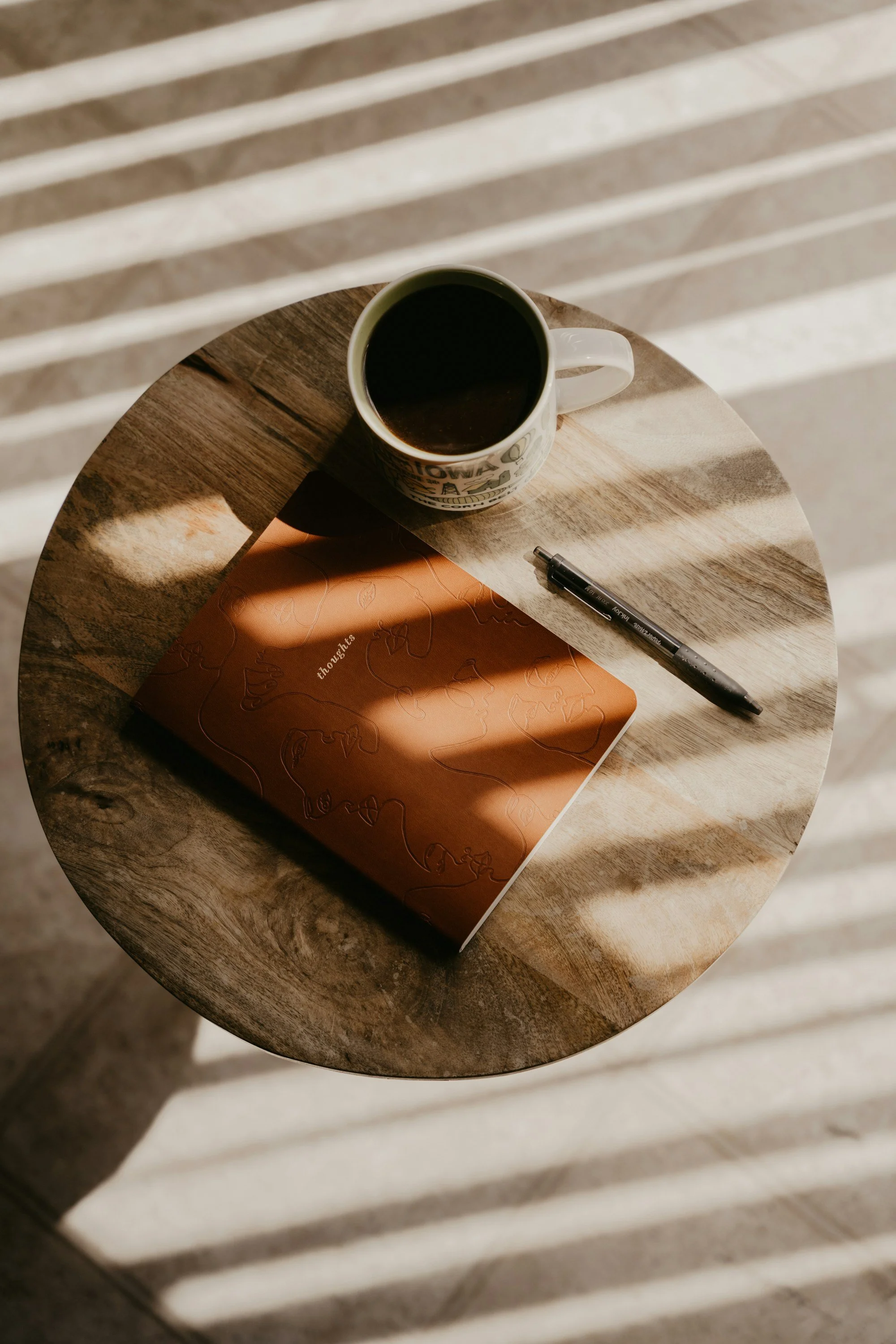
Morning pages are three pages of handwritten, free-flowing writing, done first thing in the morning. You write whatever comes into your head, without planning, editing or judging it. The pages can be about your dreams, the weather, an argument from yesterday, a shopping list or the feeling that you have nothing to write about. All of it counts.
The three basic rules are simple:
Three pages. Full pages, written until you reach the end of the third one.
By hand. Writing by hand slows you down and keeps you away from screens and notifications.
In the morning. Ideally before the day pulls you in, while your mind is still quiet.
Morning pages are private. They are not meant to be good writing, and they are not meant to be read by anyone else. Cameron also advises against rereading them in the early weeks, so that you write freely without thinking about how the words will look later.
Three pages, every morning, written for no one but you.
How morning pages differ from other journaling
If you already keep a journal, you may wonder what makes morning pages different. The main difference is that they have no topic and no goal. A gratitude journal asks what went well, a reflection journal works with questions, and a bullet journal organises your days. Morning pages simply follow your thoughts wherever they go.
That makes them a good complement to other methods. Some people write morning pages and use prompts in the evening. Others use morning pages for a few months to get used to writing every day and then move on to something more structured. If you are not sure which method suits you, my guide on how to find your journaling style compares the most common approaches.
Why morning pages help
The effect of morning pages is hard to measure, and most of what people report comes from their own experience. Still, a few reasons come up again and again:
They clear your head. Thoughts that keep circling often lose some of their weight once they are on paper. Many people describe the pages as a way of making space before the day starts.
They show you patterns. When the same worry appears on your pages every morning for two weeks, you notice it. That can be the first step to doing something about it.
They lower the bar for writing. Because nothing on the pages has to be good, writing becomes less intimidating. This is why Cameron recommends them to anyone who feels creatively blocked.
They create a quiet start. Twenty or thirty minutes with a pen and a hot drink is a calm alternative to reaching for your phone as soon as you wake up.
Ideas appear. Somewhere between the shopping list and yesterday's conversation, a useful idea sometimes turns up. It is a welcome side effect.
Morning pages are a writing practice. If you are going through a difficult time, they can be a helpful outlet, and talking to someone you trust or getting professional support is still important.

How to start writing morning pages
You don't need much to start. A notebook, a pen and some time in the morning are enough. These steps make the first weeks easier:
Choose your notebook. Three pages in a small notebook is quick, three pages in a large one takes longer. Cameron writes about full-size pages, but there is no rule against starting smaller and moving up later.
Choose a pen that writes easily. You will write a lot, so a pen that glides is worth more than a fancy one.
Prepare the night before. Put the notebook and pen where you will see them in the morning: on the kitchen table, next to the kettle or on your bedside table.
Write before anything else. If possible, write before you check your phone, read the news or open your email. Coffee or tea is allowed, of course.
Keep your hand moving. If you don't know what to write, write that you don't know what to write. Keep going until the three pages are full.
Close the notebook and start your day. No rereading, no analysing. The pages have done their job.
Expect the first week to feel strange. Many people find the pages repetitive or boring at first. That is normal and part of the process. After a while, the writing usually becomes easier and less self-conscious.
Your morning pages starter kit
- A notebook with enough room for three pages a day
- A pen that writes smoothly
- A regular time and place
- Twenty to forty minutes before the day begins
- Permission to write badly
For your morning pages
The Artist's Way by Julia Cameron (30th Anniversary Edition)
The book where morning pages come from, with a twelve-week programme for rediscovering your creativity.
View on Amazon(affiliate link)Minimal Hardcover Notebook
A simple hardcover notebook with plenty of space, sturdy enough to be used every morning.
View on Amazon(affiliate link)Everyday Gel Pens
Smooth gel pens that glide over the page, good for writing three pages without tired hands.
View on Amazon(affiliate link)A Fountain Pen
For anyone who enjoys the feeling of ink on paper and wants to make the morning ritual a bit special.
View on Amazon(affiliate link)
What to write when you have nothing to say
The empty page is the most common obstacle, especially in the first weeks. The good news is that morning pages accept anything. If your mind feels blank, try one of these starting points:
Describe the room you are sitting in, what you can hear and what the light looks like.
Write down what you dreamt, even if you only remember a fragment.
List everything you need to do today, then write about the item you least want to do.
Write about how you slept and how your body feels.
Pick up a thought from yesterday that is still on your mind.
Write "I don't know what to write" until something else appears. It usually does.
These are only ways in. Once your hand is moving, let the writing go wherever it wants. You don't need to stay with the starting point.
Questions for the first page
What is the first thing on my mind this morning?
What am I looking forward to today, and what am I avoiding?
What did I not have time to think about yesterday?
What would make today feel good enough?
Common questions about morning pages
A few questions come up again and again when people start:
Do I have to write by hand?
The original practice is handwritten, and many people find that the slower pace changes the kind of thoughts that appear. Typing is faster and can work if handwriting is difficult for you, but it brings the screen and its distractions back into your morning.
What if I can't write in the morning?
If your mornings are full, with children, an early commute or a job that starts at dawn, write when you can. Pages written at lunchtime are still valuable. You can also start with one page and build up to three when your schedule allows it.
How long does it take?
Most people need between twenty and forty minutes, depending on the size of the pages and how fast they write. It often gets quicker over time.
What should I do with the finished pages?
Keep them somewhere private. Some people never read them again, others look back after a few months to see what has changed. A few people tear them out and throw them away, which is also fine. What matters is the writing itself.
How to keep the habit going
Starting is easier than continuing. After the first enthusiasm wears off, morning pages can start to feel like a duty. A few things help:
Tie the pages to something you already do. Writing while the coffee brews or right after breakfast makes the habit easier to remember.
Lower the goal on hard days. One page is better than none. The habit matters more than the page count on a single morning.
Make the space pleasant. A favourite mug, a corner by the window or a candle can turn the pages into a moment you look forward to.
Don't judge a single morning. Some pages will feel useless. Over weeks, the practice usually feels different from how it does on any one day.
Start again without guilt. If you miss a week, pick up the notebook the next morning and carry on.
If you want more structure in your writing life, The Journaling Companion, my 65-page digital guide and workbook, introduces different journaling methods and helps you find the one that suits you. You will also find free reflection pages in The Femme Space, my free printable library.
If you are looking for a present for someone who writes every morning, I have a list of gifts for journal lovers.
Morning pages and the rest of your journaling
Morning pages work well on their own, but they also fit into a wider journaling practice. If you are new to journaling, my guide on how to start journaling when you have never done it before covers the basics. For ideas beyond free writing, have a look at what to write in a journal. And if your thoughts are loudest at the end of the day, these night journaling prompts can be a calm counterpart to your morning pages.
Put a notebook and a pen next to your kettle tonight and write your first three pages tomorrow morning.