How to Reinvent Yourself Without Becoming Someone Else
Reinventing yourself does not have to mean becoming unrecognisable. Sometimes it simply means noticing what no longer fits and giving yourself permission to do something differently.
There is something about the idea of reinventing yourself that sounds wonderfully dramatic. You imagine waking up one morning with a completely different routine, a clearer sense of direction, better habits, new clothes and perhaps an entirely new personality to go with them. It is especially tempting around the beginning of a new year, when everything seems to encourage us to decide who we are going to become next.
But most real reinvention does not look like that. It happens much more quietly. You stop doing something because you finally admit that you do not enjoy it anymore. You become interested in something you never expected to care about. You spend less time with certain people and more time with others. You change your mind about what you want your days to look like. Sometimes you simply realise that a version of yourself you have been carrying around for years no longer feels particularly true.
I think that is the kind of reinvention worth paying attention to. Not creating a more impressive version of yourself, but becoming a little more willing to notice who you already are now.
You are allowed to outgrow an old version of yourself
One of the strange things about changing is that other people often continue to know an older version of you. Perhaps you were always the organised one, the ambitious one, the person who said yes to everything or the friend who was always available. Maybe you built part of your identity around a job, a relationship, a city, a particular dream or simply an idea of what you thought your life would eventually become.
Those identities can become surprisingly difficult to put down. Even when they no longer fit, there can be a feeling that changing them somehow makes everything that came before less real. It does not. You can have genuinely wanted something five years ago and genuinely not want it now. You can have loved a version of your life and still be ready for another one.
Sometimes reinventing yourself begins with a very ordinary sentence: I don't think I want this anymore. That sentence does not immediately tell you what comes next, but it can still be an important place to begin.
Before you reinvent yourself, notice what already feels wrong
When you feel restless with your life, the instinct is often to start adding things. A new routine. A new goal. A new hobby. A new wardrobe. A new morning ritual that somehow involves getting up much earlier than you naturally want to.
Before adding anything, it is worth looking at what is already there.
Think about an ordinary week rather than your ideal life. Which parts feel genuinely good? Which parts leave you strangely drained? What do you keep postponing? What do you look forward to? What have you quietly stopped caring about? Where are you doing something mostly because it is what you have always done?
You do not have to immediately fix any of it. In fact, noticing without rushing into a solution can tell you much more than making another list of goals. If you want somewhere to put those thoughts, this is also a good moment to open a notebook. My guide to what to write in a journal when you don't know what to write has some simple starting points if a blank page tends to make your mind go equally blank.
Reinvention does not require a completely new life
The internet version of self reinvention tends to be very visible. Change your hair. Redecorate your home. Buy different clothes. Wake up at five. Delete every app. Move somewhere new. Become the kind of person who somehow drinks green juice before sunrise.
There is nothing wrong with changing how you look or making your surroundings feel different. Sometimes an external change really can mark the beginning of something. But buying the objects associated with a new identity is much easier than actually finding out whether that identity belongs to you.
You can reinvent your life without replacing everything in it. Perhaps you begin spending Sunday mornings alone instead of automatically making plans. Perhaps you start taking yourself to places you have been waiting for someone else to suggest. You return to something you loved when you were younger. You decide that being busy is no longer something you want to be proud of. You start making dinner properly instead of eating while looking at your phone. None of these things would make a particularly dramatic before-and-after photograph, but they can change how your life feels from the inside.
Ask yourself what you want more of, not only what you want to change
When people think about changing their lives, the questions are often framed around what is wrong. What habit should I break? What should I improve? What should I stop doing? What part of myself needs work?
Try asking a different question: What would I genuinely like more of?
Maybe you want more evenings that are not already spoken for. More books. More dinners around a table. More time outside. More creativity that does not need to become a side project. More people you can be quiet around. More mornings when you do not immediately reach for your phone. More things you do simply because they make an ordinary Tuesday better.
That question is useful because it moves reinvention away from correcting yourself and towards building a life you actually want to inhabit. It also makes change much more concrete. “Become a better version of myself” is difficult to act on. “I want to read again” gives you somewhere to begin.

Try things before turning them into your new identity
You do not have to decide that you are now a runner before going for a run. You do not have to become a creative person before buying some paint. You do not need to announce that this is your year of slow living before spending one Saturday without plans.
Sometimes we make change unnecessarily intimidating by turning every new interest into an identity. Then, if we stop enjoying it three weeks later, it feels as though we have failed at becoming the person we said we were going to be.
Try letting things remain experiments for a while. Take the pottery class. Go somewhere alone. Borrow the book. Try the recipe. Spend a weekend differently. Change your routine for a week and see what happens. You are gathering information about yourself, not signing a contract.
This is one reason I like journaling during periods of change. It creates a record of what you are actually discovering rather than what you decided in advance you should become. If you are still figuring out what kind of writing works for you, How to Find a Journaling Style That Actually Fits You might be useful alongside this.
Let yourself be a beginner again
One of the less glamorous parts of reinventing yourself is being bad at things.
The older we get, the easier it becomes to stay inside the parts of life where we already know what we are doing. Beginning something new means being slow, awkward or uncertain again. You might take a class where everyone seems more experienced. You might go somewhere alone and feel slightly self-conscious. You might make something that looks nothing like the picture. You might try a new routine and discover after four days that you hate it.
That is not evidence that the reinvention is going badly. It is evidence that you are doing something unfamiliar.
There is a particular freedom in having hobbies and interests you are not trying to master, monetise or become known for. If you want ideas, 30 Offline Hobbies to Try Instead of Scrolling has plenty that can simply be tried without needing to become your next big thing.
Change your surroundings when they keep pulling you backwards
Willpower gets an unreasonable amount of credit. Your environment quietly decides far more than we tend to notice.
If your phone sleeps beside you, you will probably pick it up in the morning. If the book you want to read is hidden on a shelf while the remote is on the sofa, one option requires less thought than the other. If all of your evenings are booked weeks ahead, there is no room for the slower life you keep saying you want.
This is where a few physical changes can genuinely help. Put the journal somewhere visible. Leave the book on your bedside table. Keep your walking shoes near the door. Move the charger out of the bedroom. Make the things you want more of slightly easier to reach and the things you want less of slightly less automatic.
You do not need to redesign your home around your new personality. You are simply making a little room for different choices.
Choose a notebook you'll want to keep nearby
A journal does not need to be beautiful to be useful. But if having one you genuinely like makes you more likely to leave it within reach and actually write in it, here are three very different options.

The decorative one
For keeping somewhere visible when you want your journal to feel a little more special.
View on Amazon →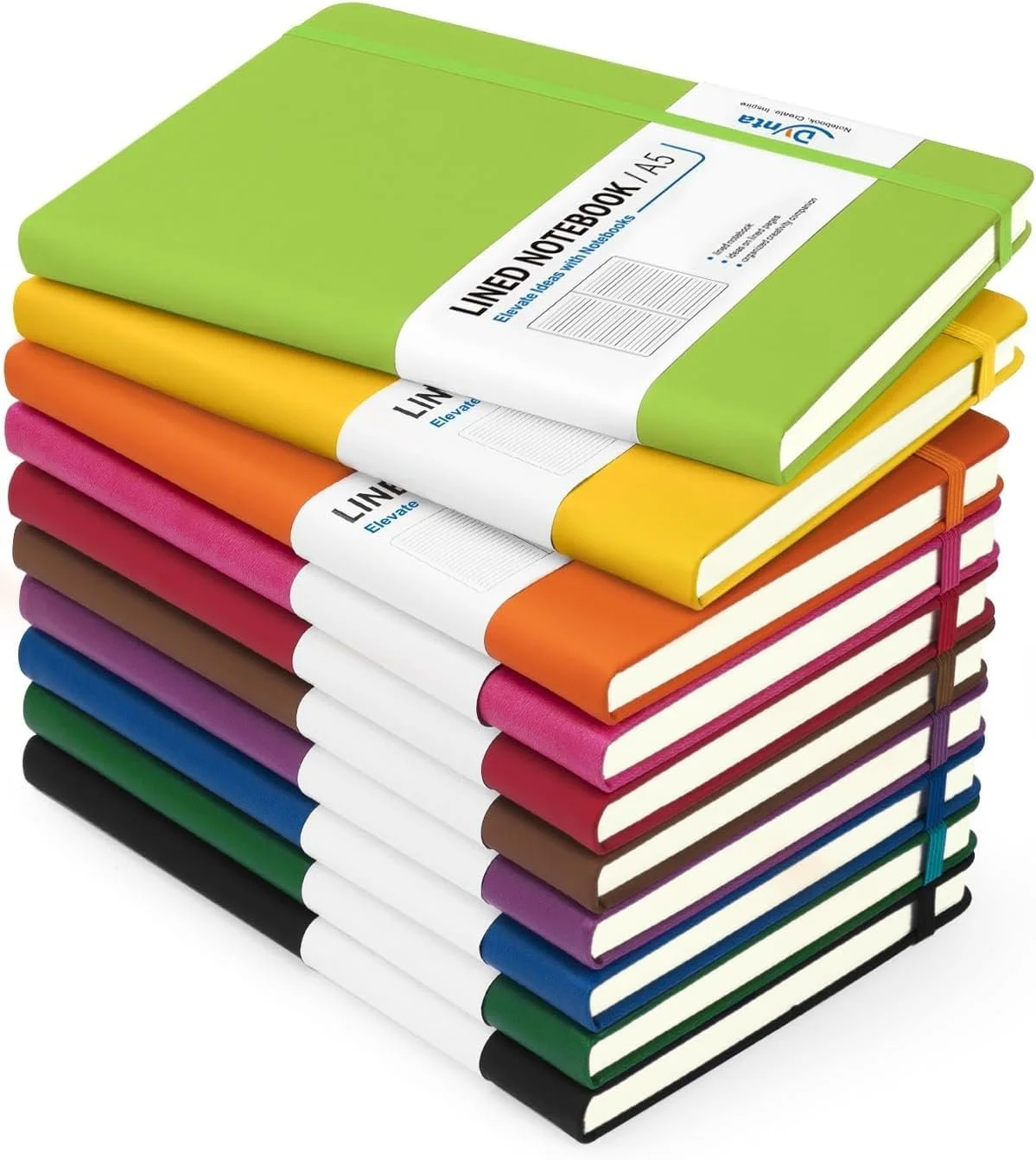
The everyday ones
Simple lined notebooks for thoughts, lists and everyday writing without making the blank page feel too precious.
View on Amazon →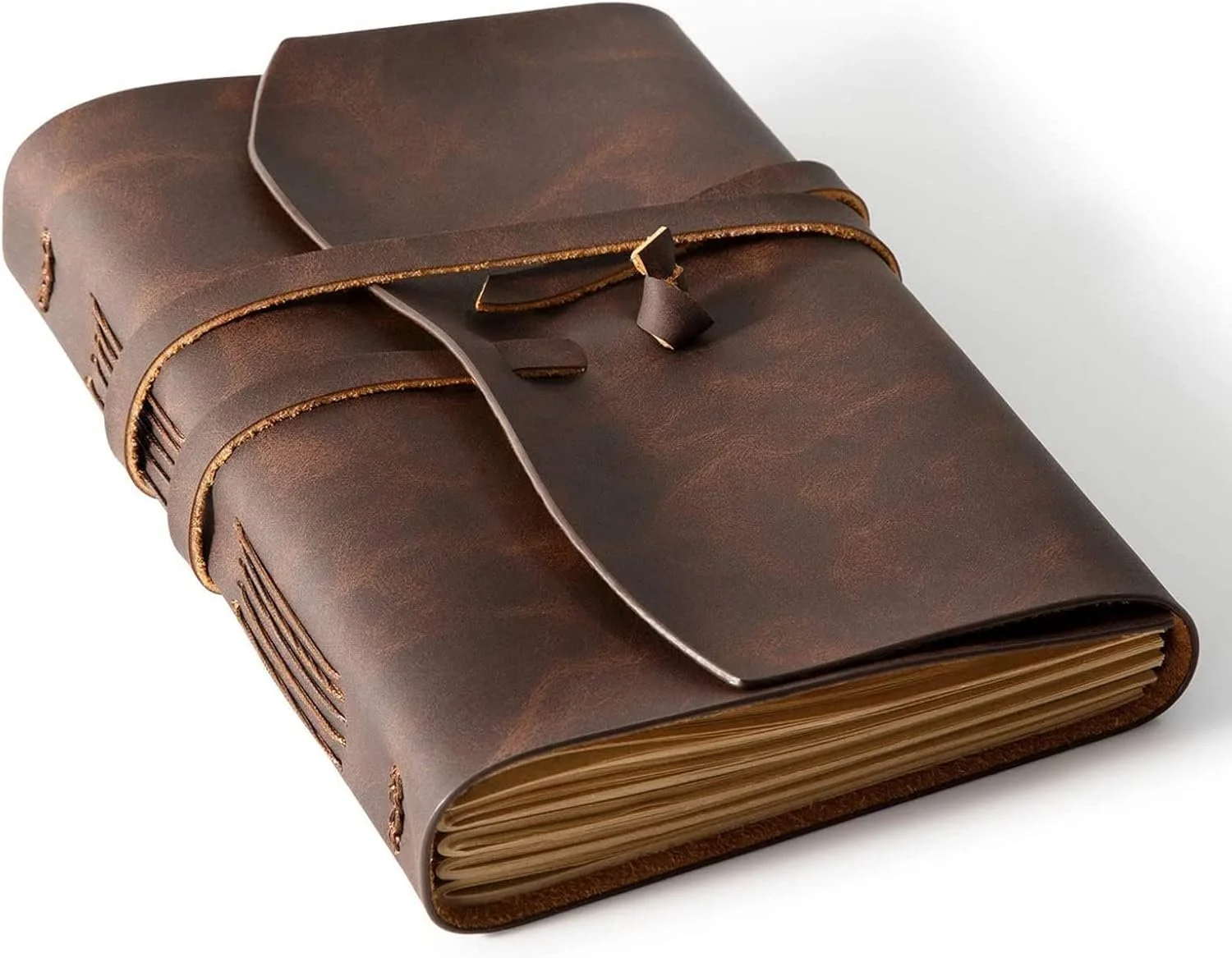
The keep-for-years one
A tactile leather journal for anyone who likes the idea of keeping one notebook through a longer chapter of life.
View on Amazon →As an Amazon Associate I earn from qualifying purchases.
Be careful whose life you are trying to reinvent yours into
Sometimes the desire to reinvent yourself does not begin with your own dissatisfaction. It begins after twenty minutes of looking at everybody else's lives.
Suddenly your home looks wrong, your wardrobe is boring, your weekends are not interesting enough and apparently everybody else has found a morning routine that changed their life. It can become difficult to tell the difference between I want this and I have seen this often enough that I think I should want it.
If you notice that happening, step away from inspiration for a little while. Give yourself enough quiet to have your own preferences again. You might discover that the life you want is less polished, less productive and considerably more ordinary than the one you have been trying to construct. That is allowed.
A good life does not have to photograph particularly well.
You can change without explaining the whole thing
There is also no requirement to announce your reinvention.
You can start dressing differently without declaring a new era. You can stop drinking without explaining it at every dinner. You can spend more time alone, become less available, take a class, change direction professionally, return to an old interest or decide that something you once wanted no longer matters to you.
People may notice. Some may ask questions. Others may prefer the version of you they already understand because it is more familiar to them. You are still allowed to change.
Not every personal shift needs a manifesto. Sometimes it is easier to let a new version of your life become real before trying to explain it.
10 questions to help you reinvent yourself
If you feel ready for change but cannot quite tell what kind, take a page and work through these slowly. You do not need to answer them all at once.
Which parts of my current life still feel like me?
Which parts feel as though I am maintaining an older version of myself?
What have I become curious about lately?
What do I want more of in my ordinary weeks?
What am I doing because I genuinely want to and what am I doing because it is expected?
What would I try if I did not have to be good at it?
Is there something I have outgrown but have not admitted yet?
What have I been waiting for permission to change?
If nobody else could see my life, what would I choose differently?
What is one small thing I could do this month that would make my life feel more like mine?
Do not turn your answers into a twenty-point improvement plan. Circle one or two things that feel particularly true. That is enough to begin with.
Give yourself a month instead of a makeover
If the idea of reinventing yourself still feels enormous, forget about the next year for a moment. Give yourself one month.
Choose one thing you would like more of and one thing you would like less of. Then make one small change that supports each. Perhaps you want more reading and less automatic scrolling, so you leave your phone outside the bedroom and put a novel beside the bed. Perhaps you want more time alone and fewer plans made out of obligation, so you keep one evening a week empty. Perhaps you want more creativity, so you spend an hour every Sunday making something without deciding whether it is useful.
At the end of the month, ask yourself what actually changed. What felt natural? What felt forced? What do you want to keep? What sounded appealing in theory but did not suit your real life?
Then adjust. Reinvention can be iterative. You are allowed to learn as you go.
You do not have to wait for January
January makes change feel official. A birthday can do the same thing, as can moving house, ending a relationship, starting a job or reaching some age that suddenly makes you look at your life differently. These moments can be useful markers, but they do not own the right to beginnings.
A random Thursday is enough.
If you happen to be reading this around the turn of the year, I have also put together 45 New Year Journal Prompts for a Fresh Start. They are designed for looking back and thinking about what you want more of without turning January into another self-improvement project.
And if you are here at another time of year, nothing about the process really changes. You can notice what no longer fits in March. You can start again in August. You can decide on an ordinary afternoon that you would like your life to feel a little different.
Keep a record of the person you are becoming
One of the nicest things about keeping a journal through a period of change is that eventually you can look back and see things you did not notice while they were happening. An idea that appeared once becomes something you keep returning to. A small experiment becomes part of your routine. Something that once felt enormous becomes ordinary.
If you would like a little more structure while you work through those thoughts, this is exactly the kind of season I created The Journaling Companion for.
Give your thoughts somewhere to go
If you are in a season of figuring out what still fits and what you might want to change, The Journaling Companion gives you 65 pages of journaling methods, thoughtful prompts, guided reflections and writing exercises to help you explore those thoughts on paper.
You do not need to know who you are becoming before you begin.
Explore The Journaling CompanionReinventing yourself can be much quieter than you think
Maybe you will make a big change this year. Maybe you will move, leave something behind, begin something new or make a decision that changes the shape of your days. But perhaps your reinvention will be much harder to point to. You will become a little more protective of your time. You will stop trying to make yourself enjoy things you have outgrown. You will pick up an old interest. You will spend more evenings at home. You will say no sooner and yes more deliberately.
Months from now, you may realise that your life feels different even though there was never one dramatic moment when everything changed. That is often how it happens.
You do not need to become someone else. You can simply keep becoming more honest about what still belongs in your life and what does not.
Have you ever felt like you were outgrowing a version of yourself? Maybe you are in the middle of that kind of change right now. I’d love to hear what reinvention means to you, or what you’re hoping to make a little more room for in your life. Leave a comment below and tell me.